
3 Steps to Keep Leather Belts Supple and Avoid Heat Damage
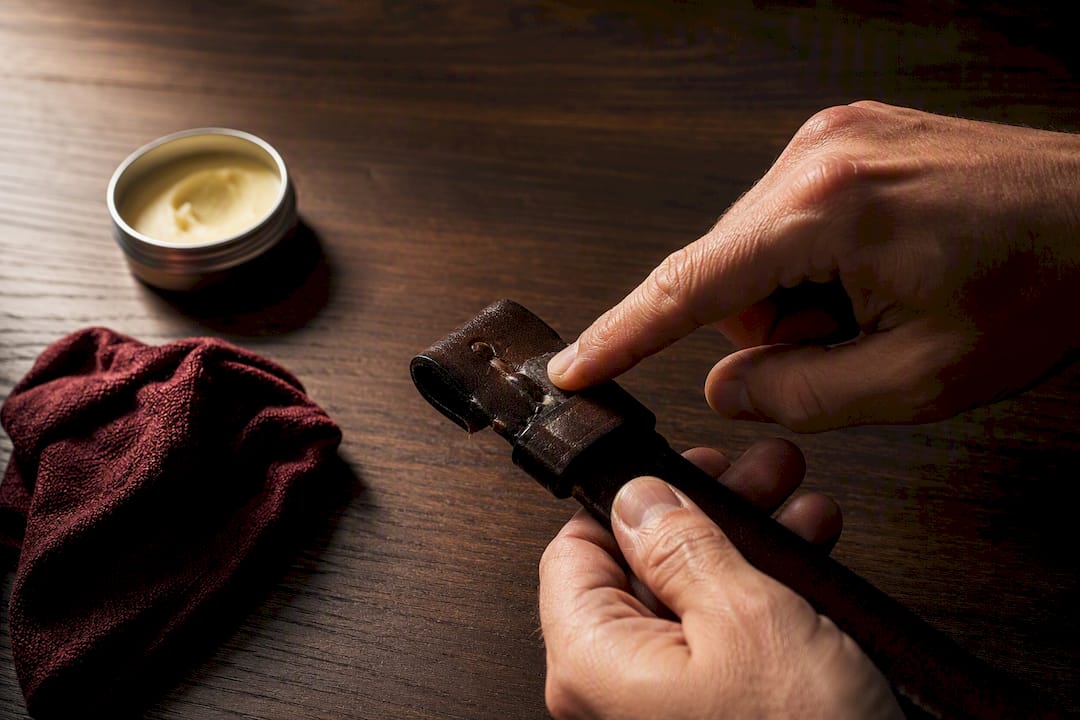
Yes, a light, occasional maintenance routine keeps a leather belt supple and extends its life for years. The rule is simple: clean first, air-dry away from heat, then condition only when the leather is fully dry and actually needs it. Different leathers demand different handling, and suede is the one major exception to nearly everything below.
TL;DR:
- Regularly wipe the belt with a barely damp cloth and air-dry in shade to prevent dirt buildup and heat damage.
- Use cornstarch or talc for oil stains and avoid aggressive scrubbing or alcohol on unfinished or veg-tan leather surfaces.
- Condition smooth or full-grain leather every three to six months to maintain suppleness, but avoid over-conditioning to prevent darkening and loss of shape.
- Store belts by hanging or loosely rolling in breathable containers, and always dry at room temperature away from heat sources.
- Deep cracks or structural damage require professional repair or belt replacement, as conditioning cannot fix significant deterioration.
Table of Contents
- What Kind of Leather Belt Care Does Your Belt Actually Need?
- What’s the Best Routine for Cleaning a Leather Belt?
- How Do You Get Stains Out of a Leather Belt?
- When and How Should You Condition a Leather Belt?
- How Should You Dry and Store a Leather Belt?
- Can a Stiff or Cracked Leather Belt Be Saved?
- Why Trust This Leather Belt Care Approach?
- What Belt Care Actually Matters, and What’s Overhyped?
- Sources
- FAQ
What Kind of Leather Belt Care Does Your Belt Actually Need?
A belt’s finish determines what you’re allowed to do to it, and getting this wrong is how a good belt gets ruined fast.
Smooth, finished leather has a slick, even surface with a light sheen. It tolerates a barely damp cloth without complaint.
Full-grain or vegetable-tanned leather looks more matte and natural, often with visible grain texture. It’s more porous, so water and alcohol soak in faster and can leave marks, and harsh cleaners strip its natural oils quickly.
Oil-tanned or pull-up leather shifts color when flexed or touched, a trait leatherworkers call “pull-up.” It’s already saturated with oils, so it needs less frequent conditioning than a drier full-grain hide.
Suede and nubuck have a fuzzy, napped texture. Water is the enemy here; brushing and eraser blocks do the work instead, following the same suede-safe approach we recommend for other leather goods.
Common mistakes across all four types:
- Using olive oil, coconut oil, or other kitchen oils, which go rancid and attract dirt
- Spraying alcohol-based cleaners on unfinished veg-tan leather
- Scrubbing with dish soap or all-purpose household cleaners
What’s the Best Routine for Cleaning a Leather Belt?
Most belts only need three steps, done in the right order.
- Dry dust or brush first. Use a soft cloth or horsehair brush to remove surface grit before any liquid touches the leather. Skipping this step is how you grind dirt into the grain.
- Wipe with a barely damp microfiber cloth. Not wet, just damp. Work in small sections and avoid soaking the edges or stitching.
- Air-dry in the shade, then condition only if needed. If the leather still looks dull or feels stiff once dry, move to conditioning.
For heavier grime, a small amount of saddle soap works well, but treat it as an occasional deep clean, not a weekly habit. Overusing saddle soap can leave residue and dull the finish, so spot-test on an inconspicuous section first, like the underside near the buckle.
How often should you actually do this? Wipe as-needed, whenever you notice dust or grime. Conditioning is a different clock: every 3 to 6 months for normal daily wear, tightened up if you sweat heavily or wear the belt outdoors often.
Pro Tip: Keep a dedicated microfiber cloth just for your leather goods. Cloths that have touched cleaning sprays or lotion can transfer residue straight onto your belt.
How Do You Get Stains Out of a Leather Belt?
Real stains call for patience over force. Scrubbing almost always makes things worse, and speed is rarely your friend here.
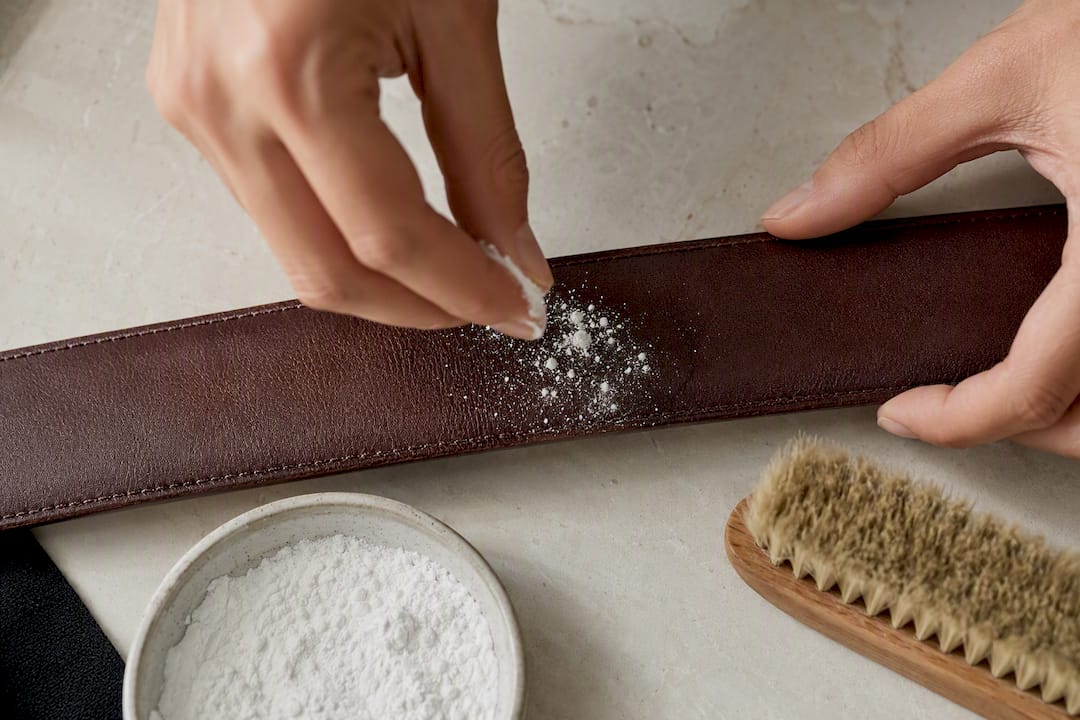
Grease and oil stains respond well to absorption rather than washing. Blot off any excess first, then cover the spot with cornstarch or unscented talc for several hours so the powder pulls the oil out of the grain. Brush it away and repeat if a faint mark remains.
Ink is trickier. On finished, smooth leather, a cotton swab lightly dabbed with 70% isopropyl alcohol can lift fresh ink, but always spot-test on a hidden area first. Skip this entirely on raw or veg-tan leather, since alcohol will darken and dry it unevenly.
Water rings form when a belt gets splashed and dries unevenly. The fix is almost paradoxical: dampen the entire surrounding area evenly with a clean cloth, then let it air-dry in the shade so it dries as one piece rather than in blotchy rings.
Salt stains from sweat show up as pale, crusty patches near the buckle. A damp wipe lifts the salt; dry fully, then condition once clean.
Mold and mildew need a firmer response. Brush off any surface growth outdoors, then wipe with a 1:1 mix of water and white vinegar, drying slowly. Heavy or recurring mold is a job for a leather specialist.
| Problem | Fix | Watch out for |
|---|---|---|
| Grease/oil | Blot, then cornstarch or talc for hours | Don’t rub, or you’ll spread it |
| Ink | Isopropyl alcohol on finished leather only | Never use on raw veg-tan |
| Water rings | Re-dampen evenly, shade-dry | Uneven drying creates new rings |
| Salt/sweat | Damp wipe, dry, then condition | Skipping the dry step traps moisture |
| Mold/mildew | Vinegar/water 1:1, slow air-dry | Heavy growth needs a specialist |
When and How Should You Condition a Leather Belt?
Conditioning replaces the natural oils that wear, sweat, and everyday exposure strip out of the hide; for detailed advice on maintaining handcrafted pieces, see our guide on how to care for handmade gemstone jewelry. Skip it too long and the leather turns brittle. Overdo it and you risk the opposite problem: oversaturated fibers, a darkened finish, and a belt that loses the structure it needs to hold its shape.
Reach for a dedicated leather conditioner or cream first. Mink oil or neatsfoot oil can work on very dry, dark leathers, but both will darken the hide noticeably, so use them sparingly and never on lighter tones. Avoid kitchen oils altogether as they are not suitable.
Application matters as much as product choice:
- Clean and fully dry the belt before applying anything
- Test the conditioner on a hidden spot first
- Use a pea-sized amount on a soft cloth, working it in circular motions
- Apply a touch extra at the buckle fold, since this high-flex point loses oil fastest and shows stiffness first
- Buff off any excess, then let the belt rest 12 to 24 hours before wearing it
On scheduling, conditioning every three to six months covers normal daily wear. Gym belts or anything exposed to heavy sweat need monthly attention instead, while belts stored in humid climates can go longer between treatments, since high humidity already keeps leather from drying out too fast.
How Should You Dry and Store a Leather Belt?
Heat is the single fastest way to ruin a leather belt, full stop. Direct heat from hairdryers, radiators, fireplaces, or a sunny windowsill pulls moisture out too quickly, and that rapid moisture loss causes stiffening and cracking that no amount of conditioner reverses. Always let a belt air-dry at room temperature, away from any heat source and out of direct sunlight.
Storage habits matter just as much as drying:
- Hang the belt buckled on a hook, or roll it loosely with the grain facing outward
- Skip plastic bins or airtight containers, which trap humidity and invite mildew
- A breathable cotton bag or drawer works better than sealed plastic
When traveling, roll the belt loosely rather than folding it into a tight coil, and wrap the buckle in a soft cloth so it doesn’t dig into the leather during transit.
Can a Stiff or Cracked Leather Belt Be Saved?
The honest answer depends on how deep the damage goes. A dry, matte surface with moderate stiffness is recoverable. Consistent, correct conditioning restores suppleness within a few applications, particularly at the buckle fold.
Deep cracks that run through the grain, sections that are delaminating, or stitching that’s torn out are a different story. No conditioner repairs structural damage like that, and pushing more product onto a structurally compromised belt just wastes conditioner. At that point, a professional leather repair shop or replacement is the realistic path forward.
For stubborn stiffness right at the fold point, try a two-step recovery: condition once, let the belt rest for two weeks, then reapply. This gives the oils time to fully penetrate rather than sitting on the surface. If the buckle itself is still solid but the strap has failed, some belts allow you to transfer the hardware onto a new strap rather than replacing the whole piece.
Why Trust This Leather Belt Care Approach?
A consistent philosophy across leather care categories is that less product, applied correctly, beats aggressive treatment every time. The same principles that keep a belt supple guide our leather bag care routines and our designer furniture maintenance guide, because hide behaves the same way whether it’s on your waist or your sofa.
A few habits carry across every leather item you own:
- Always spot-test a new product on a hidden area before treating the whole piece
- Use less product than you think you need. You can always apply more later
- When a leather good involves suede or exotic skins, treat it with the same dry-only caution you’d use on suede sneakers
- Reach out to a product page or customer service team for guidance specific to an unusual finish or exotic leather
This guide reflects editorial contribution from Lysander, drawing on established leather-care standards rather than one-off product testing.
What Belt Care Actually Matters, and What’s Overhyped?
Most belt care advice online overcomplicates a genuinely simple job. Readers get bombarded with elaborate multi-product routines when the leather itself needs very little: dirt off, moisture managed, oil replaced only when the hide asks for it.
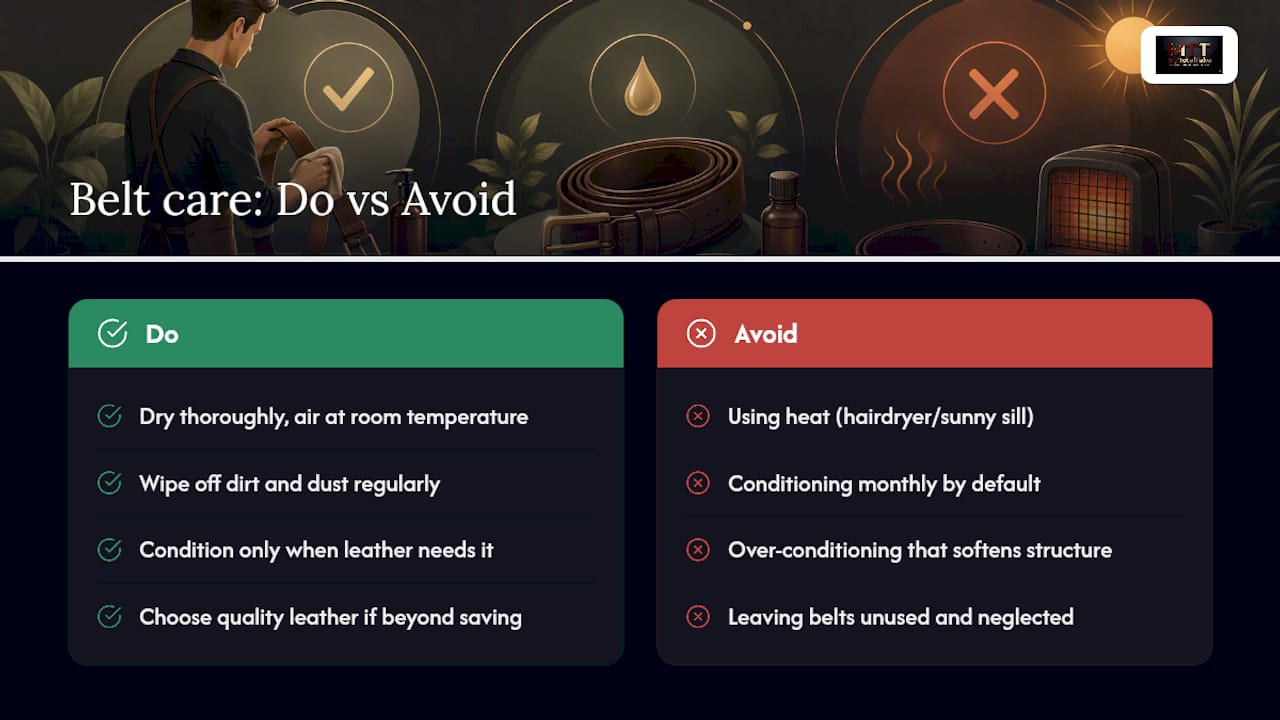
The conventional wisdom fails in one specific place: frequency. Plenty of guides push monthly conditioning as a universal default, and that’s simply too aggressive for a belt worn a few days a week in a mild climate. Over-conditioning is a real risk, not a myth. It darkens finishes unevenly and can soften the structure that makes a belt hold its shape at the buckle. The belts I’d worry about are the neglected ones, sitting in a closet drawer for a year with zero attention, not the ones getting wiped down occasionally.
If you take one thing from this whole approach, prioritize the drying step over everything else. Heat damage is the one mistake you truly cannot walk back with a jar of conditioner. Everyone reaches for a hairdryer or a sunny windowsill out of impatience, and it’s the single most common way a decent belt turns brittle before its time. Get that right, condition sparingly, and a well-made leather belt will genuinely outlast most of what’s in your closet. If yours is already past saving, a well-chosen premium leather accessory built from quality hide will hold up far longer against the same routine.
— Lysander
Sources
- How to condition leather — Pecard
- How to Care for a Leather Belt: Clean, Condition and Store | Holdform
- How to Clean Leather Goods: Complete Guide — Leather Craft Haven
FAQ
Do Leather Belts Need to Be Oiled?
Most belts need conditioning, not oiling, every three to six months for normal wear. Heavy oils like mink oil or neatsfoot oil work only on very dry, dark leathers and will darken the finish noticeably.
How Do You Maintain a Leather Belt Day to Day?
Wipe off dust and grime as it appears with a barely damp microfiber cloth, always air-dry away from heat, and condition only every few months when the leather starts to feel dry or stiff.
What’s the Best Oil or Conditioner for a Leather Belt?
A dedicated leather conditioner or cream is the safest everyday choice for most finishes. Mink oil or neatsfoot oil suit very dry, dark leathers but should be used sparingly since both darken the hide.
Should You Use Leather Conditioner on Every Belt?
Not automatically. Suede and nubuck belts should never get traditional conditioner or water; they need dry brushing and eraser blocks instead, while smooth and full-grain belts benefit from conditioner every three to six months.











Leave a comment