
Portable Power Station vs Gas Generator
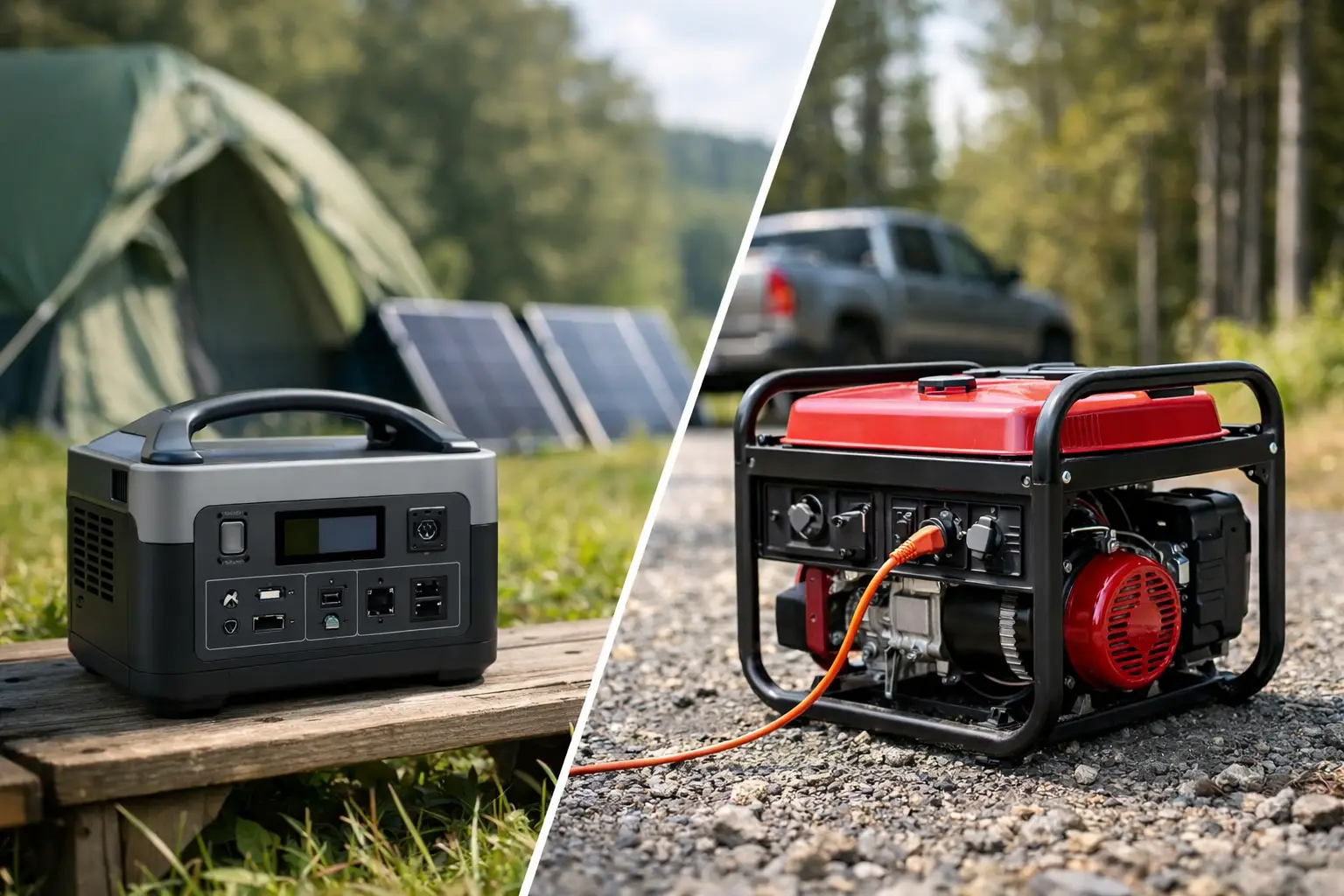
When the lights go out or the weekend plans move off-grid, the choice between a portable power station vs gas generator stops being abstract very quickly. It becomes about comfort, noise, convenience, and how much disruption you are willing to live with. For some households, a sleek battery-powered unit feels like the obvious modern upgrade. For others, raw fuel-based output still wins.
Portable power station vs gas generator: what really separates them?
At a glance, both solve the same problem. They give you electricity when wall power is unavailable. The difference is in how they deliver it and what kind of experience comes with it.
A portable power station stores electricity in an internal battery and delivers it through AC outlets, USB ports, and sometimes DC inputs. You recharge it from a wall outlet, a vehicle, or solar panels depending on the model. A gas generator creates power by burning gasoline, propane, or another fuel through an engine.
That one distinction shapes almost every trade-off. Portable power stations are quieter, cleaner, and easier to use indoors. Gas generators are typically better at producing higher wattage for longer stretches, as long as you have fuel on hand. If you are shopping with both function and lifestyle in mind, this is less about which one is universally better and more about which one fits your space, habits, and expectations.
Why more shoppers are leaning toward portable power stations
For many buyers, a portable power station feels aligned with how people want to live now. It is compact, refined, and low-friction. You press a button, plug in your essentials, and move on. There is no fuel mixing, no engine startup ritual, and no heavy exhaust smell lingering around your patio, garage, or campsite.
That convenience matters more than people expect. If you live in an apartment, townhome, or a neighborhood where noise carries, a battery unit is a far more elegant solution. You can keep phones charged, run laptops, power Wi-Fi for a while, and support small kitchen or lighting needs without turning your backup plan into a whole event.
Portable power stations also suit design-conscious households better. They store cleanly, look more discreet, and integrate into everyday living in a way gas generators rarely do. For a curated home environment, that difference is not trivial.
The catch is capacity. If you want to run a refrigerator all day, power tools continuously, or support multiple large appliances during an outage, you need to pay close attention to wattage, surge power, and battery size. A premium portable power station can handle an impressive amount, but not every unit is built for whole-home backup or heavy-duty jobsite demands.
Where gas generators still have the edge
Gas generators remain compelling for one reason: output. If your priority is sustained high power, they are hard to ignore. They can often run larger appliances and equipment for as long as you can refuel them, which makes them attractive for extended blackouts, remote worksites, RV use, and situations where battery recharge is inconvenient.
They are also familiar. Many homeowners already understand the formula – wheel it out, fuel it up, start it, and connect what you need. If you expect severe storms, multi-day outages, or frequent emergency use, that dependable high-capacity performance can justify the trade-offs.
Those trade-offs are real, though. Gas generators are noisy, require maintenance, and can never be used indoors because of carbon monoxide risk. They also demand more storage planning. Fuel needs to be stored safely, engines need periodic care, and startup can be less appealing when all you want is quick, quiet backup power.
For shoppers who value comfort and ease as much as utility, gas power can feel more industrial than refined. It works, often very well, but it asks more from you in return.
Noise, safety, and everyday usability
This is where the decision often becomes obvious.
A portable power station is dramatically easier to live with. It runs quietly enough for bedrooms, home offices, tents, and shared living spaces. You can use it during a storm without adding engine noise to an already stressful moment. You can bring it inside, place it near your devices, and use it without worrying about fumes.
A gas generator belongs outside, always, and far enough from doors and windows to reduce serious safety risks. That limits convenience. It also means setup is weather-dependent in a way battery units are not.
If your backup-power vision includes charging devices overnight, keeping a lamp on in the nursery, or preserving a calm indoor environment during an outage, a portable power station delivers a much more elevated experience. If your vision is keeping a sump pump, freezer, and refrigerator running through a long utility failure, a gas generator may justify its inconvenience.
Cost is not as simple as the sticker price
A lower upfront price can make a gas generator look like the value choice, but ownership costs tell a fuller story. Fuel adds up. Maintenance adds up. Oil changes, spark plugs, carburetor issues, and seasonal upkeep all become part of the equation.
A portable power station often costs more initially for comparable quality, especially in larger capacities, but day-to-day ownership is simpler. There is less maintenance, no routine fuel expense, and fewer barriers to actually using it often. That last point matters. A backup product only has value if it is convenient enough to use when needed.
There is also the question of longevity. Battery systems have a finite cycle life, so they will not last forever. But many modern units are designed for years of regular use, and for buyers who want emergency readiness plus everyday functionality, that versatility strengthens the investment. You are not just buying outage protection. You are buying power for road trips, backyard entertaining, outdoor work, and flexible living.
Which one is better for home backup?
For short outages and essential electronics, a portable power station is often the smarter fit. It can keep phones, laptops, routers, lights, fans, and smaller appliances going without noise or fumes. In a modern home where connectivity and comfort matter, that covers a surprising amount of real-world need.
For larger household demands, the answer depends on your expectations. If you want to power medical devices, refrigeration, and selected comforts for several hours, a high-capacity portable power station can be an excellent premium solution. If you need to run major appliances for days, a gas generator usually offers more endurance unless you have a substantial solar-and-battery setup.
The most sophisticated shoppers often think in tiers rather than absolutes. A portable power station can handle the clean, immediate essentials. A gas generator can serve as the heavier backup layer for extended emergencies. That approach is not necessary for everyone, but it shows why this comparison is rarely one-size-fits-all.
Portable power station vs gas generator for camping and travel
For elevated outdoor living, portable power stations are hard to beat. They let you charge cameras, drones, speakers, laptops, coffee gear, mini coolers, and lighting without disrupting the atmosphere. Quiet power changes the feel of a campsite completely.
Gas generators make more sense when you are powering larger RV loads or staying off-grid for longer periods without reliable recharging options. Even then, many travelers prefer to avoid the noise and smell unless they truly need the extra muscle.
If your version of outdoor luxury includes comfort without compromise, battery power feels far more in step with that experience.
How to choose without overbuying
Start with what you actually need to power, not what sounds impressive. Make a short list of essentials and check both running watts and startup surge. Think about where you will use the unit most often – indoors, outdoors, at home, on the road, or some combination.
Then ask a more lifestyle-oriented question: how much friction are you willing to accept? If you want grab-and-go simplicity, low maintenance, and quiet operation, a portable power station is usually the better choice. If your top priority is maximum output for extended periods, and you are comfortable with fuel, maintenance, and outdoor-only use, a gas generator still earns its place.
For many households, the premium choice is not the loudest or the most powerful on paper. It is the one you will trust, use confidently, and keep close at hand when comfort suddenly matters most. If you are exploring thoughtfully designed backup power options, curated selections at mytotaltake.com can make that decision feel far less complicated.











Leave a comment