
What Is Bespoke Furniture? Your Complete Design Guide

There’s a persistent misconception in the world of interior design: that “bespoke” furniture is simply a fancier word for custom-ordered. It isn’t. Understanding what is bespoke furniture means recognizing an entirely different tier of craftsmanship, design collaboration, and spatial precision. The bespoke furniture market is growing at an 8.4% CAGR, driven by homeowners who are done settling for pieces that almost fit. This guide breaks down what truly separates bespoke from everything else, and why it matters for the way you live.
Table of Contents
- Key Takeaways
- What bespoke furniture actually means
- Why bespoke furniture transforms interiors
- Materials, craftsmanship, and the design process
- Practical considerations before you commission
- My honest take on bespoke furniture’s real value
- Explore bespoke and high-end furniture at Mytotaltake
- FAQ
Key Takeaways
| Point | Details |
|---|---|
| Bespoke means from scratch | Every dimension, material, and internal structure is designed specifically for your space and lifestyle. |
| Not the same as custom furniture | Custom modifies templates; bespoke begins with a blank page and no constraints. |
| Long-term investment value | Bespoke pieces offer durability, timelessness, and stronger property appeal compared to mass-produced options. |
| Craftsmanship takes time | Expect lead times of several weeks to months; the design and iteration process requires patience. |
| Evaluate claims carefully | Many products marketed as bespoke are modular systems with minor upgrades, not true structural custom work. |
What bespoke furniture actually means
The word “bespoke” originates from the tailoring trade. When a garment had been “spoken for,” it was claimed by a specific person and made entirely to their measurements. The same logic applies directly to furniture. Bespoke pieces are designed and built entirely from scratch, with no template constraints shaping the outcome.
This is a meaningful distinction. Custom furniture, as the industry broadly uses the term, typically means selecting from a manufacturer’s existing range and adjusting dimensions, fabric choices, or finishes within a fixed framework. You might choose a leg style or a fabric color. Bespoke design, by contrast, starts with your room, your proportions, your lifestyle, and your specific functional needs. The piece is then engineered to meet those requirements precisely.
Many so-called bespoke products are modular systems with minor cosmetic upgrades. True bespoke involves engineering every element: carcass thickness, internal structure, service voids, reinforcements, and visible surfaces all designed for a specific space and use case. There are no fixed cabinet widths borrowed from a manufacturer’s standard range. There are no default internal layouts.
Here’s how the three categories compare:
| Feature | Bespoke | Custom | Factory/Mass-Produced |
|---|---|---|---|
| Design origin | Blank-page, fully original | Modified from existing template | Pre-designed, fixed |
| Dimensions | Any dimension, precisely tailored | Limited adjustments available | Standard sizing only |
| Materials | Freely selected for performance and finish | Options within manufacturer’s range | Pre-specified by manufacturer |
| Internal structure | Engineered for the space | Standard carcass with cosmetic changes | Standardized throughout |
| Lead time | Weeks to months | Weeks | Days to weeks |
| Price tier | Premium | Mid to premium | Budget to mid |
The core advantages of choosing bespoke include:
- Total spatial precision. A bespoke bookcase fills a recessed alcove perfectly, with no gaps, no awkward trim pieces, and no visual compromise.
- Material freedom. You specify solid oak, quarter-sawn walnut, hand-lacquered MDF, or any combination that serves your design intent.
- Structural integrity. Every joint, reinforcement, and internal component is designed for longevity rather than cost efficiency.
- Unique identity. No one else owns the same piece. It exists only in your home.
Pro Tip: Ask any furniture maker directly: “Can you show me the technical drawings before production begins?” A true bespoke maker will have detailed plans showing dimensions, internal configurations, and material specifications. A modular reseller will not.
Why bespoke furniture transforms interiors
The advantages of bespoke furniture extend far beyond aesthetics. Bespoke furniture design prioritizes functionality such as seat depth, drawer placement, and storage solutions tailored to how you actually use your home. A bespoke wardrobe isn’t just measured to fit your wall. It’s designed around how you organize your clothing, how much hanging space you need versus shelf space, and whether you want pull-out drawers or deep shelving.
This level of spatial thinking becomes especially visible in architecturally complex homes. Period properties with sloped ceilings, bay windows, or chimney breast recesses are notoriously difficult to furnish from standard retail ranges. Bespoke built-in furniture transforms awkward spaces into purposeful, resolved zones that feel intentional rather than improvised.
There’s also a compelling emotional dimension to bespoke design. As one interior design expert describes it:
“The ‘reveal’ moment when clients see the finished piece for the first time is one of the most satisfying experiences in interior design. The space transforms from a building site into something that feels definitively, permanently theirs.”
That satisfaction of truly tailored design is part of the bespoke value proposition that no price comparison spreadsheet can capture.
From a financial perspective, the logic of bespoke becomes clearer over time. Solid hardwood joinery with properly engineered internal structures outlasts flat-pack equivalents by decades. When you invest in design furniture, you’re also investing in the lasting appeal of your property. Buyers and appraisers notice quality built-in joinery and custom cabinetry in ways they never notice a retail sideboard.
The key benefits of bespoke furniture in interior design include:
- Spatial efficiency. Awkward corners, sloped ceilings, and unusual room proportions become design opportunities rather than limitations.
- Cohesive interiors. Every piece is sized, finished, and proportioned to relate to your specific architectural context.
- Heirloom-worthy durability. Premium materials and structural engineering produce pieces that last for generations.
- Property value. High-quality bespoke joinery and cabinetry are recognized by buyers as genuine upgrades.
Materials, craftsmanship, and the design process
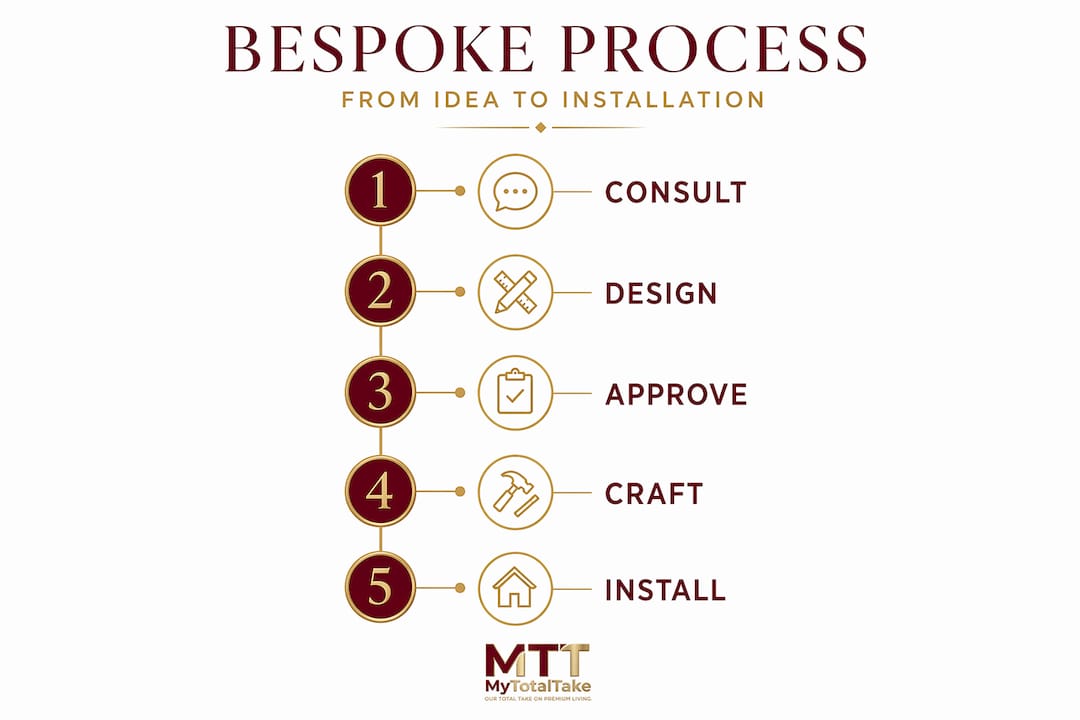
Understanding what is bespoke design also means understanding what actually happens between commission and delivery. The process is iterative, collaborative, and thorough. Here is a typical progression through a bespoke furniture commission:
- Initial consultation. The designer and client discuss the space, lifestyle requirements, aesthetic preferences, and budget parameters. Measurements are taken and architectural constraints are documented.
- Concept development. Preliminary sketches or digital renders are created. Proportions, materials, and functional features are debated and refined in dialogue with the client.
- Technical validation. Detailed technical drawings are produced showing every dimension, joint, internal layout, and material specification. This stage is where structural decisions are finalized.
- Material selection. Premium materials such as solid woods, quality veneers, and durable finishes are selected intentionally for longevity and finish quality.
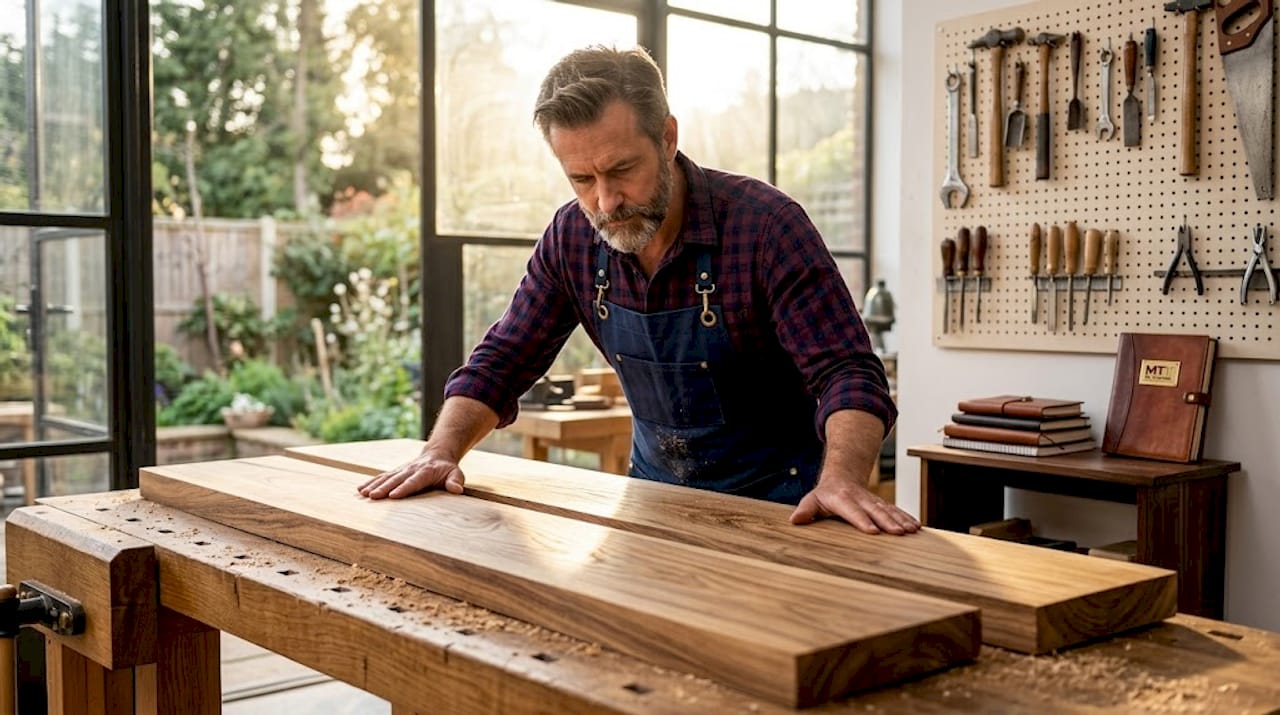
- Production. Skilled craftsmen build the piece by hand. Complex bespoke commissions can involve dozens of hours of hand-cutting, fitting, and finishing work. To draw a parallel from the tailoring world, true bespoke tailoring requires a minimum of 50 hours of hand work. Furniture of equivalent complexity demands similar investment.
- Installation and final fitting. The piece is installed on-site, with adjustments made for any site-specific variables that emerge during fitting.
The iterative nature of this process is not inefficiency. It’s the mechanism that produces pieces of exceptional precision. Bespoke furniture design evolves through client input, technical validation, and hands-on craftsmanship, resulting in fit and finish that factory production simply cannot replicate.
What bespoke home decor and furniture makers choose in terms of materials also tells you a great deal about quality. Solid hardwoods like oak, walnut, and ash are prized for their structural stability and the depth of grain they develop over time. Quality veneers applied over engineered substrates can offer dimensional stability in environments with fluctuating humidity. The finish, whether hand-applied oil, lacquer, or wax, is chosen to complement both the material and the room’s use patterns.
Pro Tip: When evaluating a bespoke maker’s credentials, ask to see completed projects in homes with similar architectural conditions to yours. Anyone can produce a clean piece for a straightforward space. Real mastery shows in how they handle corners, returns, and integration with existing architectural features like cornicing or skirting boards.
Practical considerations before you commission
Bespoke furniture is a considered investment, and approaching it with realistic expectations makes the experience far more rewarding.
Cost is the first conversation. Bespoke pieces command a premium for clear reasons: skilled labor, premium materials, extended design time, and on-site installation. Depending on complexity and materials, bespoke joinery can cost two to five times the equivalent retail piece. That premium disappears quickly when you calculate the lifespan difference. A well-made bespoke oak bookcase that lasts forty years costs less per year of use than a flat-pack equivalent replaced every decade.
Lead times require planning. Most reputable bespoke makers work four to sixteen weeks out from commission to delivery, depending on their current workload and your project’s complexity. If you’re working around a renovation or a move-in date, commission early. Rushing a bespoke commission is the fastest route to compromised quality.
Here are the most important questions to ask when selecting a bespoke furniture maker:
- Can you provide full technical drawings before production begins?
- Do you handle installation, or is that a separate contractor?
- What warranties do you offer on materials and craftsmanship?
- Can I visit your workshop to see work in progress?
- Do you have references from clients with similar project types?
- How do you handle site variations discovered during installation?
Who benefits most from bespoke furniture? The answer is broader than many people assume. Period homeowners dealing with non-standard proportions gain enormously. Apartment residents with unusually shaped rooms or minimal storage find bespoke built-ins transformative. Anyone choosing designer furniture for a primary room they intend to live with for a decade or more will find the investment pays back in daily satisfaction and lasting quality.
Pro Tip: Start with one room rather than commissioning your entire home at once. A single bespoke piece, a library wall or a fitted kitchen island, teaches you an enormous amount about your own preferences and the maker’s capabilities before you deepen the relationship.
My honest take on bespoke furniture’s real value
I’ve spent years observing how people furnish their homes, and the pattern is remarkably consistent. Most people underestimate bespoke furniture until they live with it. They see the price before they see the piece. Once the piece is installed, the conversation changes entirely.
What I’ve learned is that bespoke furniture isn’t a luxury in the frivolous sense. It’s a form of spatial problem-solving. The homes I’ve seen where bespoke joinery was integrated thoughtfully always feel more resolved. Not more expensive-looking. More right. There’s a quietness to an interior where every element belongs precisely where it sits.
The real challenge most people face isn’t the budget. It’s the patience. Bespoke requires you to articulate what you actually need before anything is built, which forces a level of self-reflection about how you live that most furniture shopping simply doesn’t demand. That process can feel unfamiliar, but it consistently produces outcomes that generic retail cannot.
My advice: resist the temptation to furnish quickly. One exceptional bespoke piece, chosen and made with real care, will anchor a room in a way that ten retail purchases cannot. Bespoke furniture transforms a house into a sanctuary that reflects the homeowner’s identity, and that is not something you can replicate from a showroom floor.
— Lysander
Explore bespoke and high-end furniture at Mytotaltake

At Mytotaltake, we believe your home deserves pieces built with the same intention and care you bring to every design decision. Our curated luxury home decor collection features premium furniture and decor selected for craftsmanship, material integrity, and timeless design. Whether you’re furnishing a single statement room or outfitting a full residence, our catalog connects you with pieces that meet the highest standards of quality and style. Explore our guides on designer furniture selection and discover how the right investment in your living space pays dividends in daily life. Premium living starts with knowing what you’re looking for, and we’re here to help you find it.
FAQ
What is bespoke furniture in simple terms?
Bespoke furniture is furniture designed and built from scratch to a client’s exact specifications, with no template or standard size constraints. Every dimension, material, and internal structure is created specifically for the client’s space and needs.
How is bespoke furniture different from custom furniture?
Custom furniture modifies an existing design within a manufacturer’s fixed options, while bespoke furniture starts with no constraints and is engineered entirely from scratch. The distinction lies in whether the design begins with the client’s space or the manufacturer’s existing range.
Why does bespoke furniture cost more?
The higher cost reflects skilled labor, premium materials, extended design and validation time, and on-site installation. Measured over the piece’s lifespan, bespoke offers better usability and longevity compared to mass-produced furniture, making it a strong long-term value.
How long does bespoke furniture take to make?
Most bespoke furniture commissions take four to sixteen weeks from the point of signing off on technical drawings, depending on complexity and the maker’s schedule. Planning ahead, especially around renovations or move-in dates, is strongly recommended.
Is bespoke furniture worth it for a small space?
Bespoke furniture is particularly valuable in smaller or architecturally complex spaces, where standard retail pieces rarely fit well. Built-in bespoke solutions maximize storage and create a cohesive interior that makes small rooms feel resolved and purposeful rather than cramped.
Recommended
Your Home Decor Styling Workflow Made Simple
How to Create a Curated Home Collection That Lasts
Comments
[…] your table already has character – think a bold stone top, dark wood finish, or architectural pedestal base – quieter chairs are often the better choice. A slim Scandinavian-inspired seat in oak, […]







Leave a comment