
How to Create a Curated Home Collection That Lasts
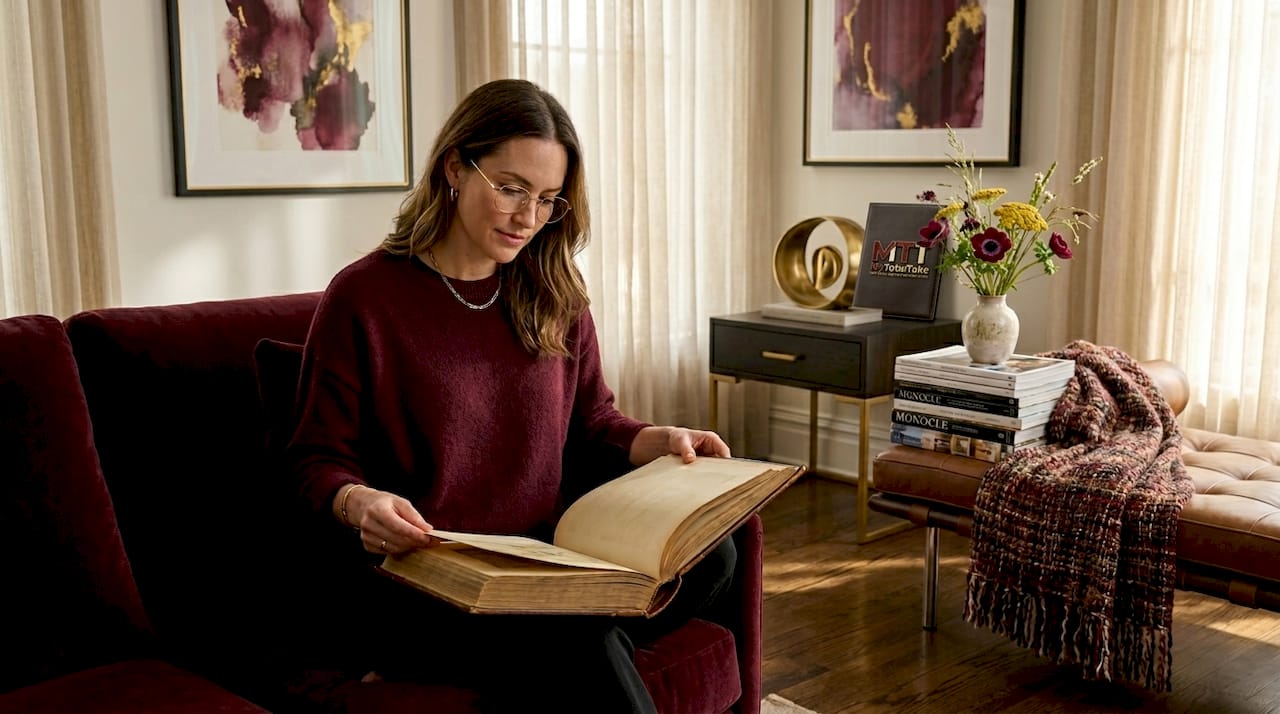
Most homes have plenty of decor. What they lack is intention. You might have shelves lined with objects, walls covered in art, and surfaces layered with finds from years of shopping, yet the space still feels restless or somehow not quite yours. Learning how to create a curated home collection changes that entirely. It shifts your approach from accumulating to choosing deliberately, from filling space to telling a story. This guide walks you through the full process: what curation actually means, how to prepare, and how to build and maintain a collection that genuinely reflects who you are.
Table of Contents
- Key takeaways
- How to create a curated home collection: curation vs. collecting
- Before you start: the preparation checklist
- Steps to curate home decor: a practical guide
- Styling and maintaining your collection over time
- My take on curation as a practice
- Transform your space with premium home decor
- FAQ
Key takeaways
| Point | Details |
|---|---|
| Curation beats collecting | Intentional selection creates cohesion and emotional resonance that random accumulation cannot achieve. |
| Preparation is half the work | Defining your theme, auditing current pieces, and understanding negative space before you start saves costly mistakes. |
| Group with purpose | Use odd numbers, varied heights, and a unifying narrative thread to create displays that feel discovered, not installed. |
| Rotation keeps it alive | Seasonal updates and thoughtful edits signal a maturing collection rather than a static one. |
| Restraint signals quality | Visual contrast and deliberate editing make a space feel expensive and intentional regardless of budget. |
How to create a curated home collection: curation vs. collecting
Most people think of curation as something that happens in galleries or museums. But curation as artful assembly applies just as powerfully to your home. The difference between curating and collecting comes down to one word: intent.
Collecting is acquisitive. You gather things you like, things you find, things that were on sale. Curating is selective. You ask whether each piece earns its place, whether it belongs to the larger story your home is telling, and whether removing it would leave the space feeling incomplete or simply neater.
“Curation is like turning your home into a personal art gallery that reflects story, personality, and endures stylistic trends.” — Elizabeth Ryan Interiors
This distinction matters because of what it produces emotionally. Homeowners with cohesive design intention report 3x higher satisfaction than those who update room by room without a unifying vision. That gap is not about budget. It is about the psychological comfort of living in a space that feels resolved rather than perpetually in progress.
A few misconceptions are worth clearing up before you begin. Curation does not mean minimalism. A richly layered collection of ceramics, books, and textiles can be fully curated if each piece was chosen with purpose. It also does not mean never changing anything. The best collections evolve. And it certainly does not require starting over. Most people already own pieces worth keeping. The work is in learning to choose premium pieces that anchor the rest, then editing everything else around them.
Building a personalized home collection is also not about following trends. Trends are a fast path to a space that looks dated within three years. The goal is a collection that reflects your specific sensibility and stays visually coherent long after the trend cycle has moved on.
Before you start: the preparation checklist
The most common mistake people make when they decide to curate is starting with shopping. The preparation phase is where most of the real work happens, and skipping it leads to more of the same disjointed result.
Start with an honest audit of what you currently own. Pull everything off shelves and surfaces and lay it out where you can see it clearly. Ask two questions about each piece: Does it mean something to me? Does it fit the kind of space I want to live in? These are not always the same question, and the tension between them is worth sitting with.
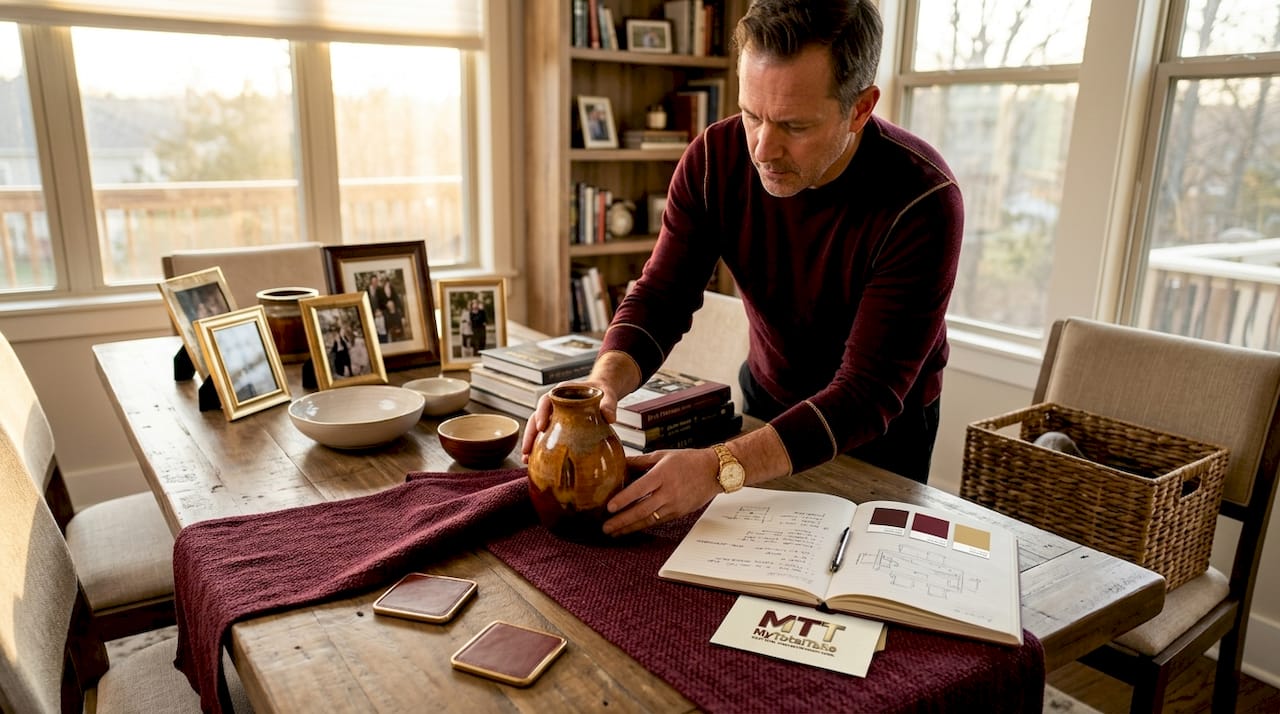
The second step is defining a unifying concept. This does not need to be a rigid style label like “mid-century modern” or “coastal.” It can be a mood, a palette, a material, or even a narrative. One approach that works well is choosing two to three words that describe how you want the space to feel: calm, textured, warm. Then use those words as a filter for every decision that follows.
Understanding negative space before you begin is also critical. Negative space is the breathing room around your objects. It is what allows individual pieces to be seen rather than competing with everything around them. Without it, even beautiful objects read as clutter.
| Preparation step | Recommended tools or approach |
|---|---|
| Audit current possessions | Clear all surfaces; photograph each piece individually |
| Define your concept or mood | Choose 2-3 anchor words; create a simple mood board |
| Identify display surfaces | Note shelves, mantels, console tables, and wall space |
| Plan lighting | Use directional or accent lighting to spotlight key pieces |
| Gather display materials | Risers, plate stands, shadow boxes, and quality frames |
Pro Tip: Before committing to a new display arrangement, photograph your current setup. Seeing it on a screen gives you the critical distance that standing in the room rarely does. You will notice crowding and imbalance you missed in person.
The rule of odds is another foundational principle. Grouping objects in odd numbers creates inherently more dynamic displays than even-numbered arrangements, which tend to feel static or symmetrical in a way that reads as corporate rather than personal. Three objects of varying height almost always outperform two or four.
Steps to curate home decor: a practical guide
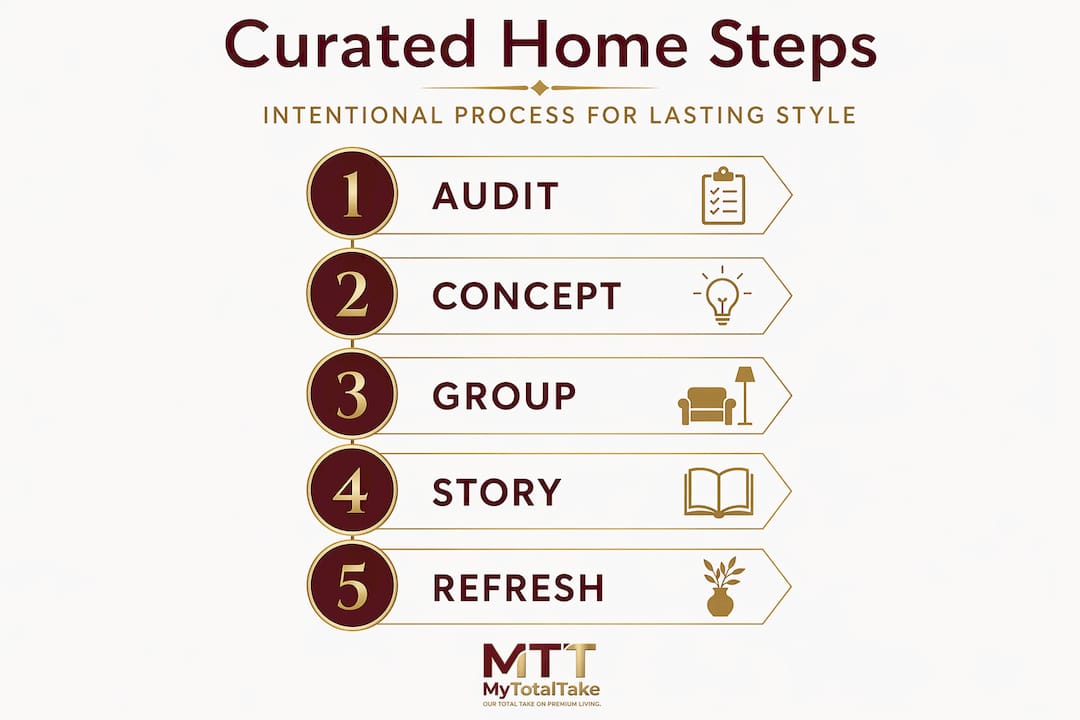
With preparation done, you are ready to build. The five core steps of curation are evaluate significance, limit quantity, group intentionally, use negative space, and rotate seasonally. Each one builds on the last.
- Evaluate significance. For every piece you are considering, ask whether it carries personal meaning, aesthetic weight, or both. Objects that have neither should leave. Pieces with one of the two can stay if they serve a functional role in the display. Pieces with both are your anchors.
- Limit quantity. Restraint is the single most powerful tool in your kit. Visual contrast and restraint are key to making a home feel expensive and intentional regardless of budget. Give yourself a cap for each surface and stick to it.
- Group intentionally. Group by theme, material, color, or narrative rather than convenience. A cluster of objects gathered from your travels to Japan reads as a story. Three random ceramic pieces placed together because they were available reads as a leftover shelf. The difference is the invisible thread connecting them.
- Use negative space. Leave deliberate gaps. The space around an object is part of the display. It draws the eye in and signals that what you are looking at was chosen, not dumped.
- Rotate seasonally. Your collection should not look identical in February and September. Rotation keeps the space feeling alive and gives you the chance to reintroduce stored pieces with fresh eyes.
When it comes to styling displays, varying heights and depths creates a sense of discovery rather than a staged look. Use a few techniques to achieve this:
- Stack books horizontally and place a single object on top to create an instant riser
- Lean framed art against a wall rather than always hanging it
- Mix tall candlesticks or vases with low, wide objects at the base
- Place one item slightly in front of another to create depth
Personal storytelling is what separates a curated home from a styled showroom. Bring in objects that hold actual meaning: a ceramic bowl from a market in Oaxaca, a sketch your grandmother made, a book that shaped how you think. These pieces do not need to be expensive. Affordable art curation using high-quality digital prints with professional framing can be every bit as compelling as original work. What matters is that the piece belongs to your specific story.
Pro Tip: When you mix vintage and contemporary pieces in a single grouping, the contrast creates the kind of timeless harmony that feels collected over time rather than purchased in a single afternoon. That lived-in quality is almost impossible to fake with all-new pieces.
One pitfall to watch for is treating your display as permanent. When a space feels finished, it often means it has stopped growing. The best-curated homes evolve. They absorb new pieces thoughtfully and shed old ones without attachment. Overcrowding is the other common trap. When in doubt, take one more thing off the shelf.
Styling and maintaining your collection over time
Creating a cohesive home aesthetic is not a one-time project. It requires ongoing attention. The good news is that maintenance does not mean constant overhaul. Small, deliberate edits done regularly keep a collection feeling current and personal without the disruption of starting from scratch.
Curated collections should be fluid, with seasonal rotations and acquisition-driven changes that keep the space feeling alive. Think of this fluidity as a sign of confidence, not inconsistency. A collection that never changes suggests its owner stopped engaging with it.
Here is how to build a sustainable maintenance practice:
- Seasonal rotation: Every three to four months, move stored pieces out and rotate displayed ones into storage. This refreshes the space without spending anything.
- The one-in, one-out rule: Before adding any new piece to a display, identify what it will replace or what will move to create room for it. This forces deliberate decision-making.
- Annual full edit: Once a year, pull everything out and re-evaluate from scratch. What no longer fits? What has overstayed its narrative welcome?
- Quality upgrades: As you develop a sharper eye, replace lower-quality pieces with better versions. This is how a collection matures over years.
When evaluating a potential new acquisition, hold it against your two to three anchor words from the preparation phase. Does a new piece feel calm, textured, and warm? Does it connect to an existing narrative in the room? If the answer is no, it may be beautiful on its own without belonging in your collection.
Pro Tip: Photograph each major display arrangement before you change it. Over time, this archive shows you how your aesthetic has evolved and helps you recognize which configurations worked best. It also makes it easy to restore a display you loved.
Refreshing without overhauling is a skill worth developing. Swapping a piece of art, changing the color of a textured throw, or replacing a vase with one in a seasonal material can shift the mood of an entire vignette. These micro-edits preserve what works while preventing the space from feeling stagnant.
My take on curation as a practice
I have spent years thinking about why some homes feel genuinely alive and others feel like a furniture catalog with good lighting. The answer, I have found, is almost never about the quality of individual pieces. It is about whether those pieces are in conversation with each other and with the person who lives there.
What surprises most people when they start curating is how confronting the editing process feels. Getting rid of a gift, a piece you paid too much for, or something you have simply lived with long enough to mistake for meaning takes real honesty. But I believe that discomfort is exactly the point. The clarity you gain about what actually matters to you aesthetically and personally is worth far more than the objects you let go.
I have also noticed that people underestimate how much joy comes from restraint. A single beautiful object on a well-lit shelf produces more pleasure per square inch than a shelf crowded with things that dilute each other. Curation, when practiced with genuine intention, turns your home into a space that feels like a point of view. And a home with a point of view is one you will never stop wanting to return to. For anyone serious about building a distinctive home, the work starts with the willingness to be selective.
— Lysander
Transform your space with premium home decor
If you are ready to move from concept to collection, Mytotaltake has assembled resources built specifically for discerning homeowners who want more than generic styling advice.

Explore premium home decor tips curated for homeowners who prioritize craftsmanship, longevity, and personal style over trends. From selecting timeless furniture pieces that anchor a room to understanding how each acquisition fits your larger collection, these guides go well beyond the surface. You will also find inspiration on how decor transforms your lifestyle in measurable, lasting ways. At Mytotaltake, the goal is always to help you make purchases you will still love a decade from now.
FAQ
What is a curated home collection?
A curated home collection is a deliberately chosen group of decor objects, art, and furnishings unified by theme, material, color, or personal narrative. Unlike random accumulation, curation requires each piece to earn its place within the larger story of the space.
Why does intentional curation matter for home design?
Homeowners with a cohesive design plan report 3x higher satisfaction than those who update their space without a unifying vision. Intentional curation creates emotional comfort and a sense that the space is resolved rather than perpetually unfinished.
How do you group objects in a curated display?
Group objects by a connecting thread such as material, color, origin, or narrative. Use odd numbers, particularly three, and vary heights and depths to create displays that feel discovered rather than arranged. Always leave deliberate negative space between groupings.
How often should you update or rotate a curated collection?
A seasonal rotation every three to four months keeps a collection feeling alive without major disruption. An annual full edit helps you identify pieces that no longer fit and creates room for meaningful new acquisitions.
Do you need a large budget to build a curated collection?
No. Digital prints with professional framing are a cost-effective way to build a layered art collection that looks considered and refined. Restraint and intentionality matter far more than price tags when it comes to creating a space that feels genuinely curated.
Recommended
Comments
[…] automatically practicing slow fashion without needing to research every brand independently. For lasting luxury in your home, the same principle applies across furniture, decor, and lifestyle […]
[…] is the same workflow behind building a curated home collection that still looks intentional five years from now instead of like a pile of impulse […]







Leave a comment