Why Fast Delivery in Luxury Defines Brand Experience
Fast delivery in luxury retail is not a convenience add-on. It is a defining pillar of brand experience that directly shapes customer satisfaction, perceived product value, and long-term loyalty. Luxury consumers do not separate the product from its arrival. They judge the entire purchase through the lens of how it reaches them. Platforms like Farfetch have already recognized this, making speed a core service expectation rather than a premium upsell. Research confirms that express shipping surged from 8% to 72% in luxury and jewelry categories during emotionally charged deadline weeks. That number tells you everything about where luxury consumers place their priorities.
Why fast delivery in luxury e-commerce is uniquely demanding
Luxury goods are not standard parcels. A Bottega Veneta bag, a Cartier timepiece, or a hand-stitched cashmere coat carries both monetary and emotional weight. The delivery experience must match that weight precisely. Speed alone is not enough. What luxury consumers require is precision at speed, meaning on-time arrival without any compromise to product condition or presentation.
The stakes are higher because logistics is part of the luxury product promise. A scuff on a leather exterior, humidity damage to a silk lining, or a broken seal on a fragrance box does not just disappoint. It signals to the customer that the brand does not care about the full experience. That perception erodes trust far beyond a single transaction.
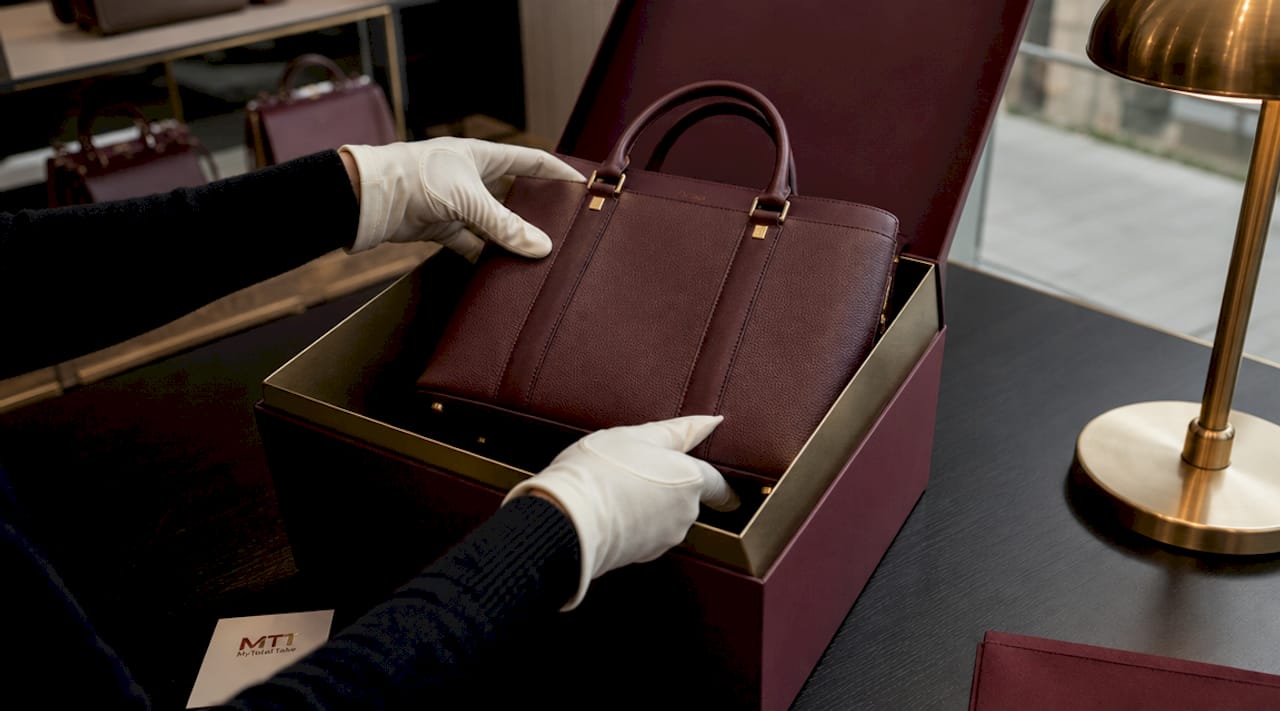
Concierge fulfillment has emerged as the industry’s answer to this challenge. This model combines premium packaging, product authentication, appointment-based delivery, and real-time inventory visibility into a single, white-glove service experience. It treats every delivery as a continuation of the in-store ritual rather than a logistical afterthought.
Key characteristics that separate luxury delivery from standard e-commerce fulfillment include:
- Bespoke packaging that preserves product integrity and reinforces brand identity at the moment of unboxing
- Chain-of-custody controls that track every handoff to prevent damage, theft, or traceability failures
- Personalized communication that keeps buyers informed with precise arrival windows rather than vague estimates
- Authentication verification built into the fulfillment process to protect both the customer and the brand
Pro Tip: When evaluating a luxury retailer’s delivery promise, look for guaranteed arrival windows and named logistics partners. Vague “3 to 5 business days” language signals a standard fulfillment model, not a premium one.
How leading luxury brands execute fast delivery strategies
The mechanics behind fast luxury delivery are more sophisticated than most consumers realize. Farfetch, one of the most cited examples in the industry, replaced paid express shipping with free next-day delivery upgrades across the UK, Germany, France, Italy, and Switzerland. That decision signals a fundamental shift: speed is no longer a revenue line. It is a brand commitment.
The operational infrastructure that makes this possible follows a clear pattern among leading luxury retailers:
- Localized fulfillment hubs placed close to high-density luxury consumer markets to reduce transit times without sacrificing handling standards
- Advanced inventory placement driven by predictive analytics that anticipate demand spikes before they occur, particularly around gifting seasons
- Premium logistics partnerships with carriers that specialize in high-value goods, offering dedicated handling lanes and climate-controlled transport where needed
- Real-time tracking integration connected directly to customer-facing platforms so buyers can monitor their order at every stage
- Dynamic fulfillment compression during peak periods, where operational pushes compress fulfillment windows from up to seven days down to a single business day
The technology layer supporting these operations is equally important. Luxury supply chains now integrate warehouse management systems (WMS), transportation management systems (TMS), and CRM platforms with real-time inventory data to enable proactive customer communication and concierge-level fulfillment. This is not standard e-commerce infrastructure. It is a purpose-built system designed around the expectations of a discerning buyer.
| Strategy | Operational benefit |
|---|---|
| Localized fulfillment hubs | Reduces transit time while maintaining handling standards |
| Predictive inventory placement | Prevents stockouts during high-demand gifting periods |
| Premium carrier partnerships | Ensures climate control, security, and dedicated handling |
| Real-time tracking integration | Reduces buyer anxiety and reduces inbound customer service contacts |
| Dynamic fulfillment compression | Maintains conversion rates during emotionally driven purchase windows |
How does fast delivery affect luxury consumer psychology?
Luxury purchases are emotional events. The anticipation that builds between checkout and delivery is part of the value a buyer pays for. Fast delivery does not eliminate that anticipation. It intensifies it by removing the anxiety that slow or uncertain shipping creates. Fast delivery enhances anticipation and reduces anxiety, reinforcing the premium nature of the purchase itself.
Emotional deadlines amplify this dynamic significantly. Gifting occasions like Mother’s Day, anniversaries, and birthdays transform delivery timing from a preference into a requirement. A luxury item that arrives one day late for a milestone occasion is not just a logistical failure. It is a brand failure. This is precisely why network-wide shipping revenue per order increased 21% from $4.15 to $5.02 during emotional deadline periods. Consumers paid more because certainty had real value to them.
The psychological benefits of reliable, swift delivery extend well beyond the single transaction:
- Trust reinforcement: A brand that delivers exactly when it promises builds credibility that no marketing campaign can replicate
- Reduced cognitive dissonance: Luxury buyers often experience post-purchase doubt about high-ticket items. Fast, flawless delivery confirms the purchase was the right decision
- Exclusivity perception: Receiving a luxury item quickly and impeccably packaged reinforces the sense that the buyer is receiving special treatment
- Repeat purchase intent: Buyers who experience a perfect delivery are significantly more likely to return, because the emotional memory of that experience stays positive
“Luxury consumers’ emotional purchase journey extends beyond checkout. Fast delivery transforms transactional events into premium experiences.” — Farfetch precision delivery insight
Free slow shipping is losing its appeal in the luxury segment. Buyers who can afford premium products are not optimizing for free. They are optimizing for certainty and immediacy. Brands that still treat fast delivery as a paid upgrade are misreading their own customers.
Luxury delivery vs. standard e-commerce: what actually differs
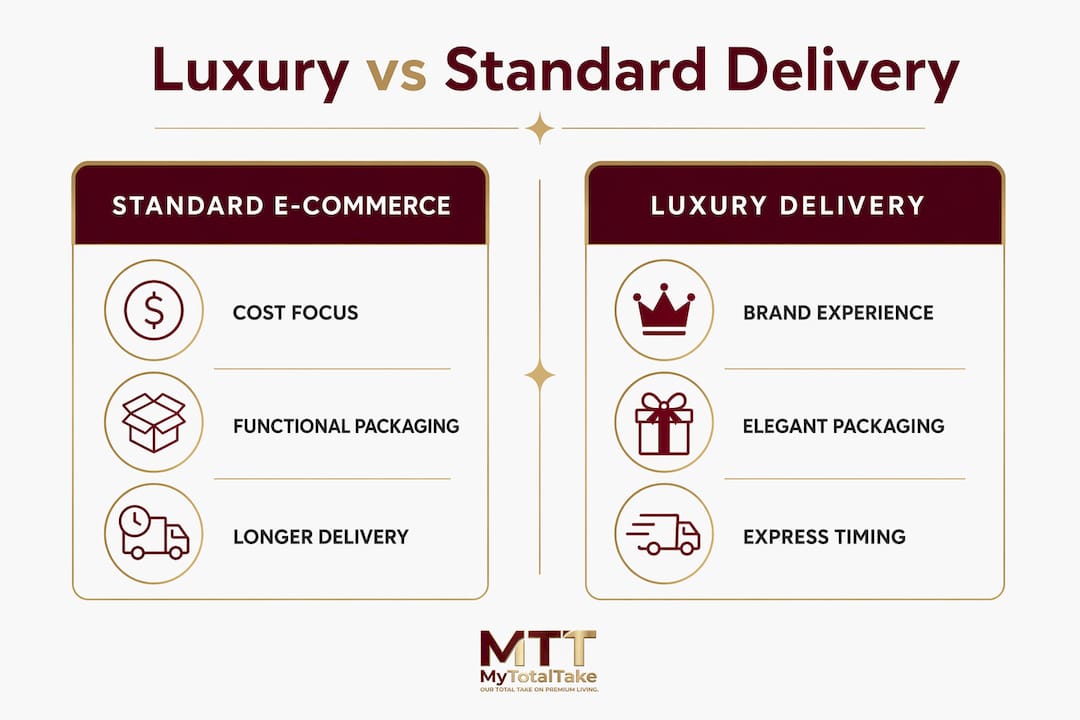
The gap between luxury delivery and standard e-commerce fulfillment is wider than most people assume. It is not simply about faster transit times. The entire service model operates on different principles.
Standard e-commerce delivery prioritizes cost efficiency and volume throughput. Luxury delivery prioritizes product integrity, brand consistency, and the emotional quality of the arrival experience. These are fundamentally different objectives, and they produce fundamentally different operations.
| Dimension | Standard e-commerce | Luxury delivery |
|---|---|---|
| Packaging | Functional, branded minimally | Bespoke, brand-consistent, gift-ready |
| Delivery window | Estimated range (3 to 5 days) | Guaranteed precise arrival time |
| Handling standards | General parcel handling | White-glove, climate-controlled where needed |
| Customer communication | Automated tracking updates | Personalized concierge-style contact |
| Cost model | Lowest viable cost | Premium justified by brand equity |
| Returns experience | Standard label and drop-off | Scheduled pickup, full inspection |
The cost differential is real, but it is justified through two measurable outcomes. First, premium delivery protects customer lifetime value. A luxury buyer who has a poor delivery experience rarely returns. Second, airfreight for luxury goods is increasingly about preserving product integrity rather than just speed, and the investment in chain-of-custody controls directly protects brand equity at scale.
Luxury brands that treat delivery as a cost center rather than a brand investment are making a strategic error. The role of fast delivery in luxury e-commerce is to extend the brand promise beyond the point of sale. Every minute between purchase and arrival is an opportunity to reinforce or undermine the premium experience the customer paid for.
Pro Tip: If you are shopping for high-value items online, prioritize retailers that offer guaranteed delivery windows and named carrier partnerships. These details signal that the brand has invested in the full experience, not just the product.
Key takeaways
Fast delivery in luxury is a brand investment, not a logistics cost. Brands that treat speed and precision as core service pillars consistently outperform those that treat delivery as an afterthought.
| Point | Details |
|---|---|
| Speed signals brand commitment | Fast delivery communicates that the brand values the full customer experience, not just the sale. |
| Emotional deadlines drive willingness to pay | Express shipping usage surged from 8% to 72% in luxury categories during gifting periods. |
| Concierge fulfillment sets the standard | White-glove handling, authentication, and personalized communication define premium delivery. |
| Precision matters as much as speed | Chain-of-custody controls and product integrity protection are non-negotiable in luxury logistics. |
| Reliable delivery builds long-term loyalty | Buyers who receive a flawless delivery experience return at significantly higher rates. |
Why I believe fast delivery has become the new storefront
I have spent years watching luxury brands invest millions in flagship store design, visual merchandising, and in-store rituals, only to let the experience collapse the moment a customer clicks “buy” online. The disconnect is striking. You would never allow a sales associate to hand a client a scuffed box with no tissue paper and a vague “it’ll arrive sometime next week.” Yet that is exactly what substandard delivery communicates.
What I find most telling is the data around emotional deadlines. When a buyer is purchasing a gift for someone they love, they stop caring about free shipping entirely. They want certainty. That shift in behavior reveals something important: luxury consumers are not primarily price-sensitive. They are experience-sensitive. Speed and reliability are not perks. They are the product.
The brands that understand this, like Farfetch with its free next-day delivery rollout across Europe, are not just improving logistics. They are redefining what it means to be a luxury retailer in a digital context. The premium home decor and lifestyle space faces the same imperative. A beautifully crafted piece of furniture or a curated home accessory deserves an arrival experience that matches its quality.
My honest view is that any luxury brand still treating fast delivery as optional is operating on borrowed time. Consumer expectations have shifted permanently. The brands that invest in logistics innovation now will own the loyalty of the next generation of luxury buyers.
— Lysander
Discover Mytotaltake’s express luxury furniture delivery
Mytotaltake curates high-end furniture and home furnishings selected for lasting craftsmanship and refined design. Every piece deserves an arrival experience that honors its quality.
Mytotaltake’s express luxury furniture delivery service is built around the same principles that define the best in luxury retail: guaranteed delivery windows, white-glove handling, and communication that keeps you informed at every stage. Whether you are furnishing a primary residence or adding a statement piece to a curated space, you should not have to compromise on how it arrives. Explore the luxury furniture collection and experience delivery that matches the quality of what you ordered.
FAQ
Why does fast delivery matter more in luxury than standard retail?
Luxury consumers judge the entire purchase experience, not just the product. Slow or unreliable delivery undermines the premium perception the brand has built, reducing trust and repeat purchase intent.
Are luxury consumers willing to pay more for faster shipping?
Yes. Research shows express shipping usage surged from 8% to 72% in luxury categories during emotional deadline periods, with network-wide shipping revenue per order rising 21%. Certainty of arrival consistently outweighs cost sensitivity for luxury buyers.
What is concierge fulfillment in luxury e-commerce?
Concierge fulfillment combines bespoke packaging, product authentication, appointment-based delivery, and real-time tracking into a single premium service model. It treats every delivery as an extension of the in-store luxury experience rather than a standard parcel dispatch.
How do luxury brands compress delivery windows during peak seasons?
Leading retailers use localized fulfillment hubs, predictive inventory placement, and dynamic operational pushes to reduce fulfillment windows from up to seven days down to one business day during high-demand gifting periods like Mother’s Day.
What separates luxury delivery from standard e-commerce shipping?
Luxury delivery prioritizes product integrity, guaranteed arrival times, white-glove handling, and personalized communication. Standard e-commerce fulfillment optimizes for cost and volume. The two models serve fundamentally different customer expectations and brand objectives.







Leave a comment