
How to Choose a Bathroom Mirror with Lights
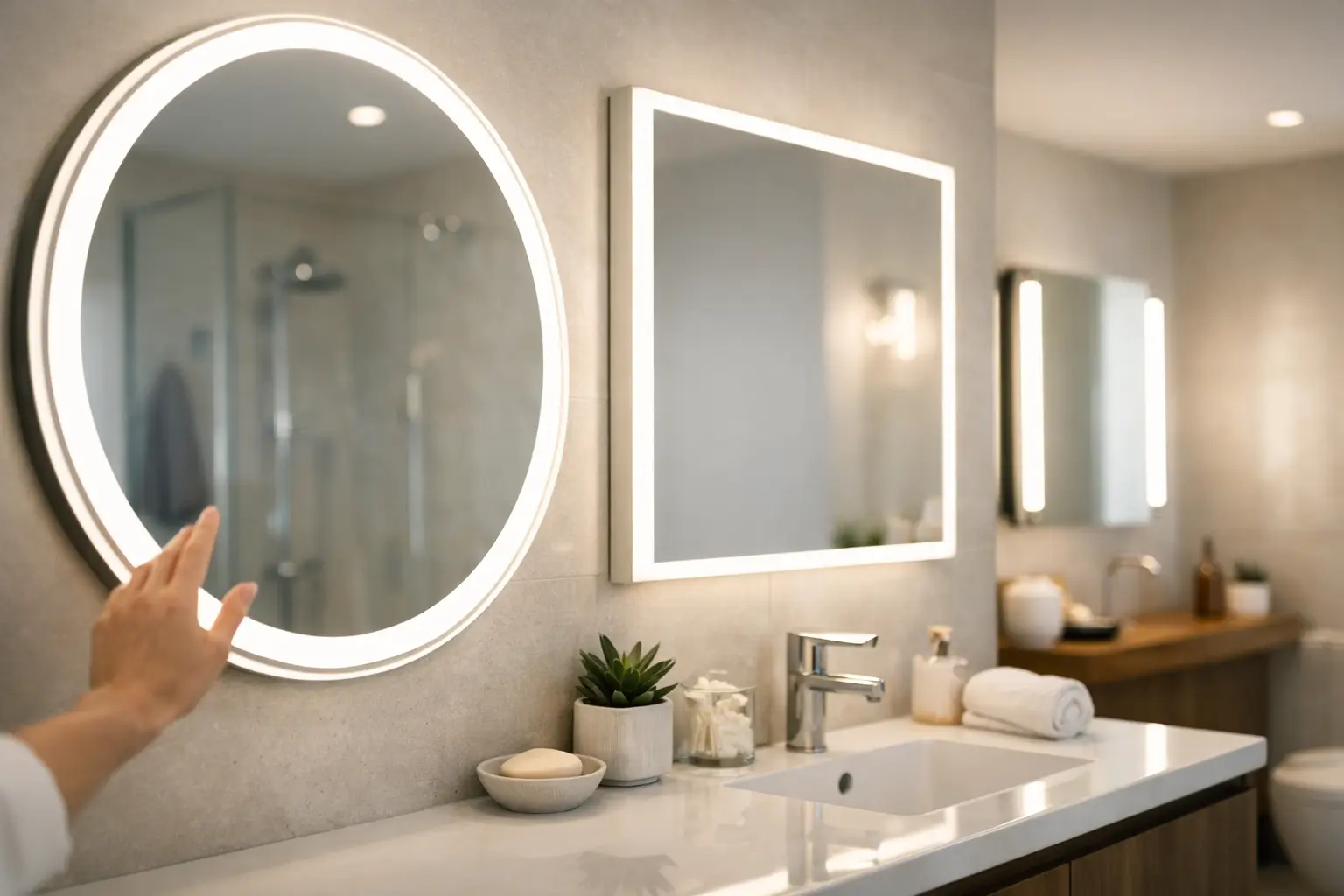
A bathroom mirror can flatter your space or fight it. The difference usually comes down to light. If you are wondering how to choose a bathroom mirror with lights, the best place to start is not with shape or finish, but with how you actually use your bathroom every morning and night.
A mirror with integrated lighting is part design statement, part daily tool. In the right setting, it creates cleaner sightlines, a more refined look, and better visibility for skincare, shaving, makeup, and winding down at the end of the day. In the wrong size or color temperature, even a beautiful mirror can feel harsh, dim, or out of proportion. Choosing well means balancing aesthetics with performance.
How to choose a bathroom mirror with lights for your space
Start with scale. A lighted mirror should feel tailored to the vanity beneath it, not like an afterthought. In most bathrooms, the mirror looks best when it is a few inches narrower than the vanity. That proportion keeps the overall composition polished and intentional, especially in design-forward spaces where every line matters.
Height matters just as much. If the mirror is too short, it loses presence and practical visibility. Too tall, and it can overwhelm the wall or crowd sconces, tilework, and storage. For shared bathrooms, think about the eye level of everyone using it. A mirror that suits one person perfectly but feels awkward for everyone else quickly becomes a compromise you notice every day.
If your bathroom is compact, a backlit or edge-lit mirror can make the room feel more open because it adds glow without the visual weight of extra fixtures. In a larger primary bath, a bolder illuminated mirror can act as a focal point, especially when paired with premium hardware and a vanity finish that deserves attention.
Prioritize the quality of light, not just the look
This is where many shoppers get pulled in by style and miss the feature that affects daily life most. The lighting should be clear, even, and flattering. A bathroom mirror with lights is meant to improve visibility, not create shadows under the eyes or wash out skin tone.
Look closely at brightness and color temperature. For most homes, a color temperature between warm white and neutral white feels the most luxurious and usable. Light that is too cool can feel clinical. Light that is too warm may be relaxing, but it can distort detail when you are getting ready. If the mirror offers adjustable color settings, that flexibility is worth considering, especially in bathrooms used for both grooming and evening routines.
Brightness should also match the room. In a powder room, a softer glow can feel elevated and atmospheric. In a primary bathroom where precision matters, stronger task lighting is often the better choice. Dimmable lighting gives you the best of both worlds. It lets the mirror shift from crisp morning function to softer evening ambiance without changing the fixture.
A well-made mirror should distribute light evenly across the face. That matters more than raw brightness. Diffused LED lighting generally creates a cleaner, more sophisticated result than exposed points of light, which can look dated or overly harsh.
Decide between front-lit, backlit, and dual-lit designs
If you are comparing styles, the lighting direction changes both performance and mood. Front-lit mirrors cast light toward you, which tends to be better for detailed grooming tasks. Backlit mirrors create a halo effect against the wall, which feels softer and more architectural. Dual-lit options combine both and often deliver the most premium experience.
There is a trade-off. Backlit mirrors are striking and modern, but some models lean more decorative than functional. Front-lit mirrors can be more practical, though the design needs to be refined enough to avoid looking purely utilitarian. If you want one mirror to do everything well, a dual-lit model often justifies the upgrade.
This is also where your bathroom style comes into play. Minimal, contemporary interiors often benefit from the floating effect of a backlit mirror. If your vanity area is your main grooming station, more direct illumination may matter more than atmosphere.
Features that are worth paying for
Not every extra feature improves the experience. The best ones make the bathroom easier to live with and preserve a clean, high-end look.
An anti-fog function is one of the most worthwhile upgrades, especially in busy bathrooms or households where showers happen back-to-back. It saves time and keeps the mirror usable when you need it. Touch sensors can also feel sleek and intuitive, though they should be responsive and easy to use with damp hands.
Adjustable brightness is close to essential if you want the mirror to feel truly versatile. Memory settings can be helpful too, especially if you prefer the same light level each day. Some mirrors include built-in clocks, Bluetooth speakers, or temperature displays. These can be appealing, but they are not always necessary. In many luxury spaces, restraint reads better than feature overload.
If you are investing in a premium mirror, focus first on lighting performance, defogging, and ease of use. Extras should support the experience, not distract from it.
Match the mirror to the bathroom’s materials and mood
The right mirror should feel curated with the rest of the room. That does not mean everything has to match perfectly, but the finishes, lines, and overall silhouette should feel connected.
A frameless lighted mirror often suits modern bathrooms with clean tile lines, floating vanities, and understated hardware. It delivers a crisp, tailored look that feels current without trying too hard. A framed mirror can add warmth and presence, especially in bathrooms with wood vanities, brushed metal fixtures, or more transitional styling.
Shape affects mood more than many people expect. Rectangular mirrors feel architectural and grounded. Round mirrors soften the room and can bring balance to a vanity with sharper lines. Pill-shaped and softly curved forms are especially effective when you want a contemporary bathroom to feel more inviting.
Think about how the mirror looks when switched off as well. A great bathroom mirror with lights should still read as a beautiful object during the day.
Check installation requirements before you fall in love
This is the practical step that protects the entire purchase. Some lighted mirrors plug in, while others are hardwired. Hardwired options usually look more custom and elevated because cords stay hidden, but they may require an electrician. Plug-in mirrors can be more convenient for renters or quick upgrades, though cord management needs careful thought.
Weight is another factor. Larger illuminated mirrors can be substantial, and the wall needs to support them properly. If your bathroom has an existing junction box, confirm it aligns with the mirror’s mounting and electrical needs. It is always better to know that before the mirror arrives than during installation.
Also consider switch placement. Some homeowners prefer the mirror connected to a wall switch for a cleaner routine. Others like integrated touch controls. Neither is inherently better. It depends on how polished and intuitive you want the space to feel.
Don’t ignore moisture, longevity, and maintenance
Bathrooms are demanding environments. Humidity, temperature shifts, splashes, and daily cleaning all affect how well a mirror ages. That is why build quality matters.
Look for materials and construction that are suited to damp spaces. Quality LEDs should have a long lifespan and consistent performance. The mirror surface should resist corrosion and maintain clarity over time. This is one of those categories where craftsmanship pays off quietly, month after month.
Maintenance should be simple. A mirror with too many seams, awkward edges, or fingerprint-prone controls can lose its appeal fast. Premium design is not only about appearance. It is about how effortlessly the product fits into everyday use.
When to go bigger, and when restraint looks better
Many shoppers assume larger is always more luxurious. Sometimes it is. A generously scaled illuminated mirror can make a bathroom feel more expansive and custom. But in smaller spaces, a mirror that stretches too far can dominate the vanity wall and throw off the room’s balance.
If your bathroom already includes statement tile, dramatic sconces, or bold stone, a quieter mirror may be the stronger choice. If the vanity area feels visually plain, the mirror can carry more design weight. The most refined bathrooms rarely rely on one oversized feature. They feel edited, layered, and proportionate.
For double vanities, the choice between one large mirror and two individual mirrors depends on the architecture. One broad mirror can feel sleek and contemporary. Two separate mirrors often create better rhythm and a more tailored, furniture-like effect. If integrated lighting is the star, two matching lighted mirrors can look especially considered.
At My Total Take, this is the kind of upgrade that earns its place quickly. The right illuminated mirror does more than brighten a wall. It sharpens the routine, elevates the room, and makes the bathroom feel finished in a way standard mirrors rarely do.
Choose the one that makes your space look better when you walk in and makes your routine feel easier when the day begins.







Leave a comment