
Discover Contemporary Home Decor: Style, Warmth, Luxury
Contemporary home decor carries a surprising amount of confusion. Many homeowners assume it means stark, cold spaces stripped of personality, or worse, they use “contemporary” and “modern” interchangeably. In reality, as Better Homes & Gardens explains, modern decor refers to a distinct early-to-mid 20th-century design movement, while contemporary simply reflects what’s current right now. That distinction matters enormously, especially when you’re investing in spaces that should feel timeless, personal, and genuinely luxurious. This guide will give you a clear definition, actionable principles, and a practical framework for applying contemporary style at its highest level.
Table of Contents
- Understanding contemporary home decor
- Core principles of contemporary interiors
- Contemporary vs. modern: Key differences for luxury homes
- How to apply contemporary style: Inspiration for sophisticated homes
- Why curation—not clutter or emptiness—defines real contemporary luxury
- Elevate your home with curated luxury furnishings
- Frequently asked questions
Key Takeaways
| Point | Details |
|---|---|
| Contemporary evolves constantly | Contemporary home decor adapts to what’s current, blending popular styles for a bespoke result. |
| Comfort and warmth lead design | Current luxury interiors prioritize tactile materials, warmth, and inviting textures over cold minimalism. |
| Difference from modern style | Contemporary is fluid and trend-driven, while modern is a historical style with specific rules. |
| Curated expression is key | True luxury comes from thoughtful, high-quality curation rather than filling space or creating emptiness. |
| Applied inspiration for homeowners | Affluent homeowners can achieve contemporary elegance by focusing on open layouts, select statement pieces, and layers of texture. |
Understanding contemporary home decor
Now that we’ve set aside misconceptions, let’s clarify what actually defines contemporary home decor.
Contemporary decor is, by its very nature, a moving target. It doesn’t anchor itself to one era or aesthetic dogma. Instead, it draws from whatever is resonant right now, which in 2026 means warmth, tactile richness, and deeply individualized expression. That fluidity is its greatest strength and the reason it suits affluent homeowners who want spaces that feel current without chasing trends recklessly.
The key characteristics of contemporary interiors include:
- Fluid lines that can range from clean and geometric to softly curved
- Neutral palettes used as a backdrop for texture and intentional accents
- Mixed materials such as stone, glass, warm metals, and natural textiles
- An openness to evolving ideas, pulling from traditional, transitional, and even industrial references
- Highly personalized curation that reflects the homeowner’s sensibility, not a showroom formula
“Contemporary decor is not a fixed style—it’s a living, breathing reflection of the current moment in design. It prioritizes what feels relevant and resonant today, making it uniquely suited to individualized luxury interiors.”
Here’s how contemporary and modern compare side by side:
| Feature | Contemporary | Modern |
|---|---|---|
| Time reference | Current, evolving | Early-to-mid 20th century |
| Lines | Fluid, varied, can be curved | Strictly clean, linear |
| Color | Neutral with rich accents | Muted, often monochromatic |
| Materials | Mixed, layered, tactile | Industrial, raw, minimal |
| Personality | Highly individualized | Consistent, movement-driven |
| Flexibility | Adapts to new influences | Tied to historic principles |
The flexibility is what makes contemporary style a natural fit for luxury decor styles at every scale. You’re not bound by rules. You’re guided by taste. For those who want to explore how its closest cousin plays out in practice, modern home decor ideas offer a useful contrast.
Core principles of contemporary interiors
With a definition established, let’s dig into the principles that shape a contemporary space.
Contemporary interiors in 2026 aren’t just visually appealing. They’re built on a philosophy: that beautiful spaces should also function beautifully. This means every decision, from layout to light fixtures, is made with both aesthetics and lived experience in mind. As ELLE Decor notes, contemporary design is frequently implemented through comfort-forward minimalism, with open, airy layouts, balanced neutral palettes enriched by texture, and occasional statement accents that anchor a room without overwhelming it.
Here’s how the core features translate into 2026 luxury expressions:
| Core principle | 2026 luxury expression |
|---|---|
| Open layouts | Fluid, room-spanning furniture arrangements with clear sightlines |
| Neutral palettes | Warm whites, soft taupes, deep earth tones, and matte finishes |
| Textural layering | Bouclé upholstery, linen drapery, stone surfaces, polished brass accents |
| Statement pieces | One bold art work, a sculptural sofa form, or a dramatic light fixture |
| Natural materials | Organic wood grains, woven textiles, travertine, and unpolished marble |
| Functional elegance | Built-in storage, integrated lighting, and furniture with clean profiles |
Achieving this look follows a logical sequence. Work through it step by step:
- Start with the layout. An open, thoughtfully proportioned layout is non-negotiable. Remove unnecessary furniture and define zones with rugs or lighting rather than walls.
- Set your neutral base. Choose two to three tones for walls, large upholstered pieces, and flooring. Keep them warm rather than stark.
- Layer textures intentionally. Add linen, stone, polished metals, and organic materials in successive layers. Each new texture should contrast with the last.
- Place your focal accent. Select one statement piece per room. A sculptural coffee table, a gallery-worthy canvas, or a high-end decor craftsmanship centerpiece all qualify.
- Edit ruthlessly. Remove anything that doesn’t contribute to the room’s sensory experience or visual purpose.
- Refine the lighting. Layer ambient, task, and accent lighting. The right lighting can elevate even a modest material.
Understanding design’s impact on luxury decor will help you make more informed decisions at each of these stages.
Pro Tip: Think “layered but edited.” The goal is warmth and depth, not volume. Fewer, better objects always create a stronger impression than many average ones. Curate your space the way a skilled editor approaches a manuscript: keep only what earns its place.
Contemporary vs. modern: Key differences for luxury homes
It’s easy to confuse contemporary with modern. Here’s how to distinguish them at the luxury level.
Both styles share a preference for clean lines and uncluttered compositions. But as Better Homes & Gardens points out, they are distinct: contemporary design is more fluid and curvy compared to the strict geometry of modern style. In a luxury context, that distinction becomes especially visible in material choice, atmosphere, and how human the space feels.
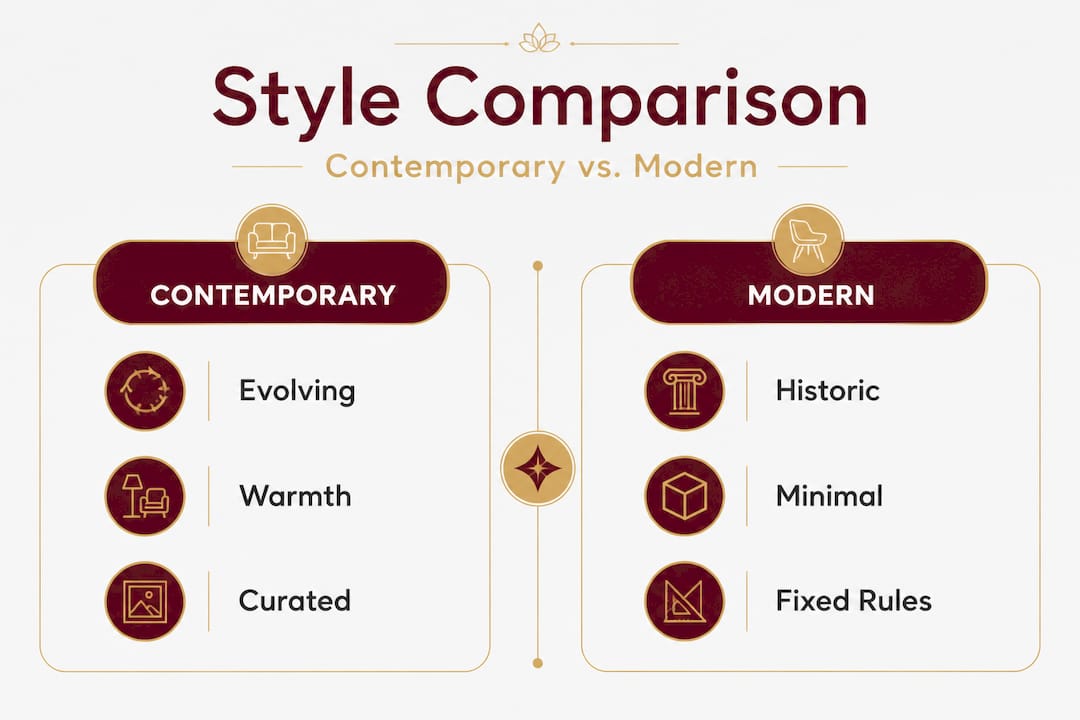
| Element | Modern luxury | Contemporary luxury |
|---|---|---|
| Lines | Rigid, geometric, precise | Fluid, sometimes curved |
| Materials | Raw concrete, steel, glass | Layered stone, warm metals, organic textiles |
| Color palette | Cool neutrals, black, white | Warm neutrals, deep tones, textured layers |
| Furniture profile | Low, minimal, architectural | Sculptural, comfort-forward, varied |
| Emotional tone | Intellectual, austere | Inviting, expressive, personal |
| Openness to trends | Resists change | Embraces current influences |
Visual cues that help you recognize each style in person:
- Modern: Flat-front cabinetry, Bauhaus-inspired furniture, absence of decorative molding, limited color, industrial materials
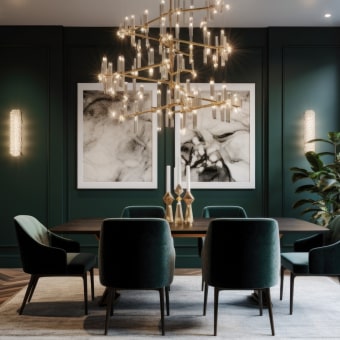
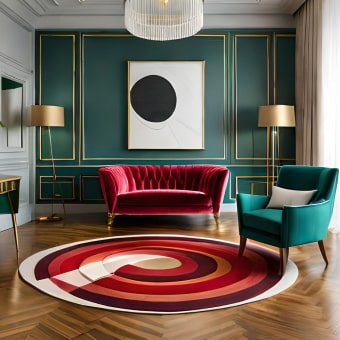
- Contemporary: Curved seating, organic accents, layered textiles, mixed metals, one or two expressive art pieces
The shift in high-end design circles is clear. Over 70% of luxury designers now blend contemporary elements with comfort-driven features in 2026. The purely austere, performatively minimal home is fading. What’s replacing it is often called “warm modernism”: a philosophy that retains structural clarity but introduces softness, tactile richness, and lived-in warmth.
For those drawn to modern luxury home decor, the good news is that contemporary principles can be layered in gradually. You don’t have to choose one or the other. You can be exploring decor styles that sit between the two, borrowing structure from modern and soul from contemporary.
How to apply contemporary style: Inspiration for sophisticated homes
Knowing the difference, let’s translate contemporary principles into design moves for real homes.
Applying contemporary decor isn’t a single renovation decision. It’s a series of intentional choices made at different scales, from architecture down to the texture of a throw pillow. Here’s a practical sequence for elevating your home room by room:
- Establish your color palette. Choose warm neutrals as your foundation: soft limestone, aged linen, warm sand, or deep charcoal. Keep walls and large surfaces tonal, and reserve bolder color for accents and art.
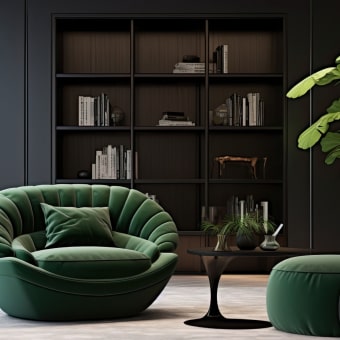
- Select your key furniture pieces. Opt for sculptural forms with quality upholstery. A cloud-like, deep-seated sofa is one of the defining comfort-forward gestures in contemporary luxury, and the cloud couch trend is a perfect example of that sensibility.
- Introduce art as an anchor. Contemporary spaces rely on art to express personality. Learning how to approach arranging luxury wall art is one of the most rewarding investments of your time.
- Incorporate technology with discretion. Contemporary luxury embraces advanced tech without letting it dominate. A sleek luxury electric fireplace is a compelling example: it delivers warmth, drama, and a focal point without the design compromise of a traditional hearth.
- Layer textiles and surfaces. Add natural fiber rugs, linen curtains, and stone or wood surfaces to create sensory depth.
As 2026 decor trends confirm, the contemporary look now distinctly favors warmth and tactile richness over cold, purely austere minimalism. Your spaces should feel genuinely inviting, not staged for a magazine shoot.
“The most desirable luxury interiors today are the ones that make you want to sit down immediately. Comfort is no longer secondary to aesthetics. It is the aesthetic.”
That designer insight captures the essential shift. Comfortable, inviting spaces are the new luxury. Austere rooms that people are afraid to use no longer signal refinement. They signal a missed opportunity.
Dos and don’ts for contemporary luxury:
- Do invest in one truly exceptional furniture piece per room rather than filling every corner
- Do use layers of natural texture to create warmth without introducing visual noise
- Do let architecture breathe by leaving negative space as an intentional design choice
- Don’t match everything too precisely. Slight variation in tone, material, and form adds sophistication
- Don’t confuse “contemporary” with “trendy.” Choose pieces that feel current but have lasting quality
- Don’t underestimate lighting. The most beautiful room can feel flat without thoughtful illumination
Pro Tip: Invest the most in tactile, sensual materials such as bouclé, travertine, aged leather, and hand-loomed textiles. These are the elements you’ll feel every day, and they carry the most emotional weight in a room.
Why curation—not clutter or emptiness—defines real contemporary luxury
To wrap up, let’s step back and reframe the real heart of contemporary decorating for the luxury home.
Here’s the honest truth: most people get contemporary luxury wrong in one of two directions. They either strip a room down to an empty, echoing shell and call it “edited,” or they fill it with expensive objects that have no coherent relationship to each other. Neither approach is contemporary. Both are failures of curation.
True contemporary luxury, as recent trend coverage frames it, is composed and layered while remaining edited and highly individualistic. It is not performative styling. It’s the quiet confidence of a space that reflects a real person’s sensibility, assembled with genuine care and expertise.
Think of it this way: a room curated with six extraordinary objects tells a more compelling story than one crowded with forty expensive things. The skill is in selection, not accumulation. The discipline is in removal, not addition.
We’ve seen this play out repeatedly in the most admired homes. The spaces that stop you cold aren’t the ones with the largest budgets. They’re the ones where every element seems inevitable, where nothing is there by accident and nothing is missing. That’s the standard worth aiming for.
When you’re making new acquisitions, ask yourself a harder question than “Is this beautiful?” Ask instead: does this add unique character to the room, or does it simply fill a gap? The most useful framework for choosing premium home decor is one that leads with purpose, not impulse.
Contemporary style rewards patience. Build your collection slowly. Live with a room before adding to it. Let quality declare itself over time.
Elevate your home with curated luxury furnishings
Inspired to take your interiors further? Here’s where to find the elements that bring the guide’s ideas to life.
At mytotaltake.com, we curate with exactly the principles covered here in mind: warmth, quality, and lasting elegance. Whether you’re refining a single room or rethinking your entire home, our collections offer pieces that earn their place.

Start with our guide to explore luxury decor across every category, where craftsmanship and design meet at the highest level. If you’re working through specific aesthetic decisions, our curated find modern decor ideas resource gives you a strong foundation. And when you’re ready to invest with confidence, the premium decor guide walks you through every decision with expert clarity. Every piece we feature is selected for the discerning homeowner who values both beauty and permanence.
Frequently asked questions
What colors are popular in contemporary home decor for 2026?
Warm neutrals, tactile textures, and subtle earth tones are leading the 2026 contemporary design palette. 2026 trends emphasize comfort, sensory warmth, and inviting color schemes over cold or stark finishes.
How does contemporary style differ from minimalist design?
Contemporary style uses an edited approach to create comfort and richness, rather than the strict austerity of pure minimalism. The contemporary benchmark in 2026 favors warmth and tactile depth over sparse, unforgiving spaces.
Is contemporary decor the same as modern decor?
No. Contemporary decor is trend-driven and constantly evolving, while modern decor refers to a specific historic movement tied to early-to-mid 20th-century design principles.
What is the best way to make a space feel contemporary and luxurious?
Use open layouts, thoughtfully curated statement pieces, and prioritize texture and warmth throughout. As ELLE Decor describes, comfort-forward minimalism with neutral palettes and strategic accents is the defining approach.
Can contemporary decor work with traditional architectural features?
Absolutely. Contemporary furnishings and palettes create engaging contrast with period architecture, highlighting original details like moldings or fireplaces rather than competing with them.
Recommended
Comments
[…] Discover Contemporary Home Decor: Style, Warmth, Luxury […]







Leave a comment