
Elevated outdoor living: design your luxury space
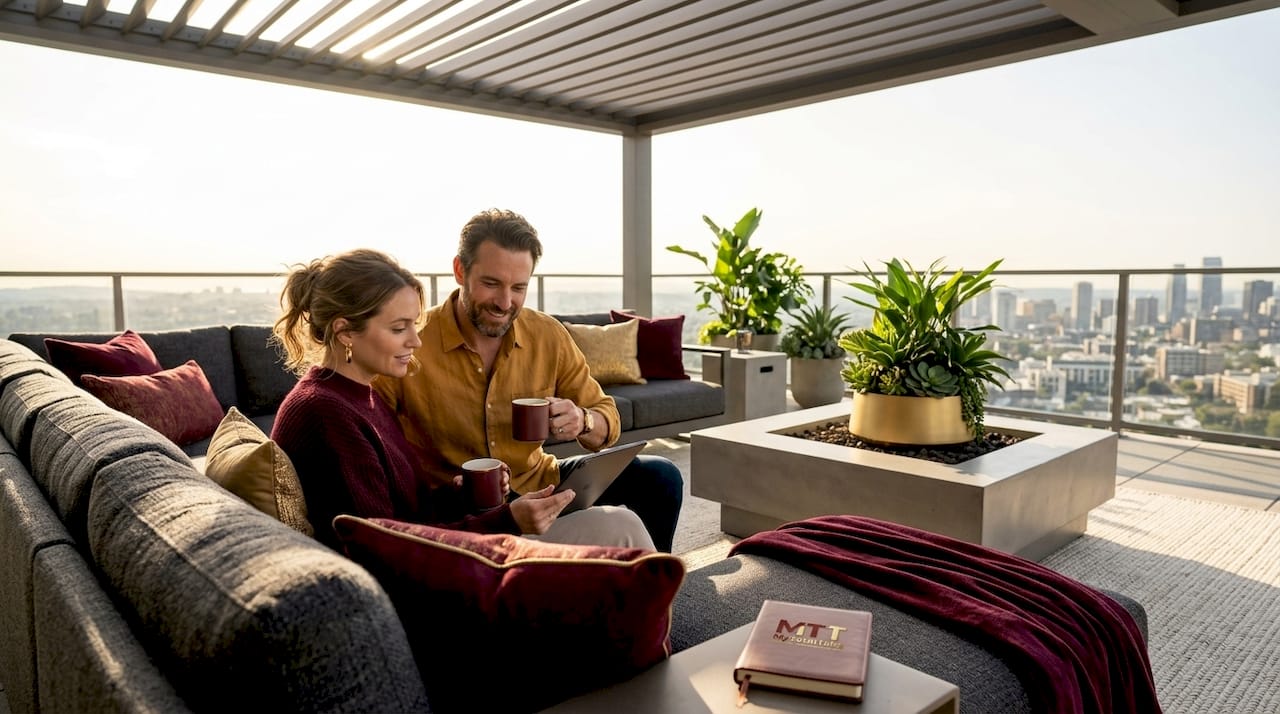
Picture this: you’ve spent thousands on a teak sectional, designer planters, and ambient string lights. But come August, the space bakes in unrelenting afternoon sun. By October, it sits unused. The investment looked right on paper, yet the space falls flat in real life. This is the most common and costly mistake in outdoor design. True elevated outdoor living isn’t about buying expensive things. It’s about building an experience that works beautifully, season after season, from the ground up.
Table of Contents
- Defining elevated outdoor living: beyond the basics
- The five pillars of elevated outdoor design
- Going upward: terraces, rooftops, and elevated structures
- Key features and luxury accents that redefine outdoor comfort
- Why most outdoor spaces miss the mark—and how system-level design changes everything
- How to bring luxury and lasting comfort to your outdoor living
- Frequently asked questions
Key Takeaways
| Point | Details |
|---|---|
| True elevation is design-led | Elevated outdoor living means strategic planning for comfort, usability, and style beyond surface upgrades. |
| System-level planning | Creating zones, controlling climate, and layering lighting transforms outdoor spaces into functional rooms. |
| Luxury finishes matter | Choosing durable furnishings and comfort features extends your outdoor enjoyment year-round. |
| Elevation expands options | Terraces and rooftops add privacy, improved views, and new opportunities for luxury outdoor living. |
Defining elevated outdoor living: beyond the basics
Most people associate the phrase “elevated outdoor living” with premium price tags. A teak dining table, lush outdoor rugs, designer lanterns. These are appealing additions, no doubt. But they represent the surface layer of what this concept truly means.
At its core, elevated outdoor living refers to designing an outdoor environment that functions with the same intentionality and comfort as your finest interior room. That means planning for how you actually use the space across different times of day, different weather conditions, and different seasons.
“Elevated outdoor living is commonly associated with extended-season use and comfort, achieved via shade structures and performance-oriented outdoor planning, so homeowners can actually enjoy the space year-round well beyond peak summer.”
The distinction matters. A space that only works on a perfect 75-degree Saturday in June isn’t elevated. It’s decorative. An elevated space is one where friends gather comfortably in April and September. Where you can linger outside after dinner without retreating indoors because of heat, wind, or poor lighting.
Key elements that define a truly elevated outdoor space include:
- Shade structures that manage sun and heat strategically, not just aesthetically
- Zoning that separates functions like dining, lounging, and cooking for seamless flow
- Lighting layers that serve both safety and atmosphere at every hour
- Microclimate control through placement, plantings, and enclosures
- Privacy solutions that make the space feel intimate and curated
If you’re curious about the power of versatile outdoor structures, our elevated outdoor living overview is a strong starting point for understanding how the right framework transforms a patio into a true living space.
The five pillars of elevated outdoor design
With the definition clear, let’s break down the five pillars that give elevated outdoor spaces their unique, luxurious function. Think of these as the structural bones behind any space that genuinely impresses and performs.
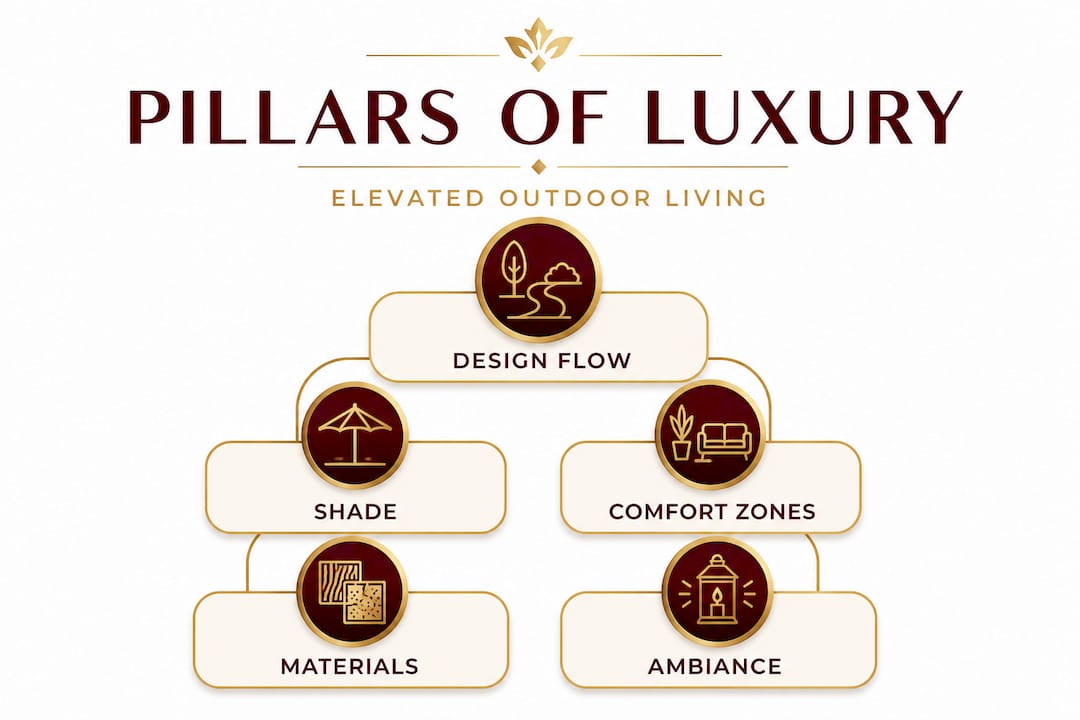
System-level planning, including layout flow, zoning, microclimate, enclosure, and lighting, ensures the space functions like an interior room rather than a loosely arranged collection of furniture.
Here’s how each pillar plays out in practice:
-
Layout and flow. The physical arrangement of furniture and pathways should guide movement naturally. Guests shouldn’t have to squeeze past chairs or awkwardly navigate around a fire pit. Plan for clear sightlines and generous walkways of at least 36 inches to keep movement comfortable and intuitive.
-
Zoning. Separate distinct activity areas just like you would inside your home. A dining zone, a lounging zone, and a cooking zone should feel distinct without necessarily being physically separated by walls. Rugs, planters, and level changes all help define zones elegantly.
-
Microclimate management. Every yard has its own microclimate, meaning the specific combination of sun exposure, prevailing winds, and ambient temperature that affects comfort. A west-facing patio without shade is brutal by mid-afternoon. Understanding and designing for your microclimate means your space performs, not just looks good.
-
Enclosure and privacy. Structures like pergolas, privacy screens, lattice panels, and dense plantings create the sense of a room without walls. Enclosure makes a space feel curated and intentional. It also dramatically reduces wind exposure, which is one of the most underrated comfort factors.
-
Lighting. Layered outdoor lighting should accomplish three things: safety (pathway lights), task function (cooking and dining areas), and mood (ambient and accent lighting). Spaces that rely on a single overhead fixture feel flat and uninviting after dark.
| Design pillar | Common mistake | Elevated approach |
|---|---|---|
| Layout and flow | Furniture pushed to edges | Grouped conversation areas with clear paths |
| Zoning | One large open area | Defined zones using rugs and planters |
| Microclimate | No shade planning | Strategic pergolas and planted buffers |
| Enclosure | No privacy features | Lattice screens, hedges, or curtain panels |
| Lighting | Single overhead fixture | Three-layer lighting: safety, task, and mood |
Pro Tip: Before purchasing a single piece of furniture, sketch your space to scale and mark where the sun falls at 10 a.m., 2 p.m., and 6 p.m. This single step prevents costly microclimate mistakes that no amount of decor can fix.
For guidance on selecting patio furniture longevity that supports these pillars beautifully, we’ve curated a collection designed to last through real seasons, not just catalog photo shoots. You’ll also find ideas for structure and accents in our outdoor decorating tips guide.
Going upward: terraces, rooftops, and elevated structures
Beyond standard ground-level layouts, the concept of elevated outdoor living takes on a literal dimension when you go up. Raised decks, second-floor terraces, and rooftop gardens introduce a new category of design considerations and genuinely transformative opportunities.
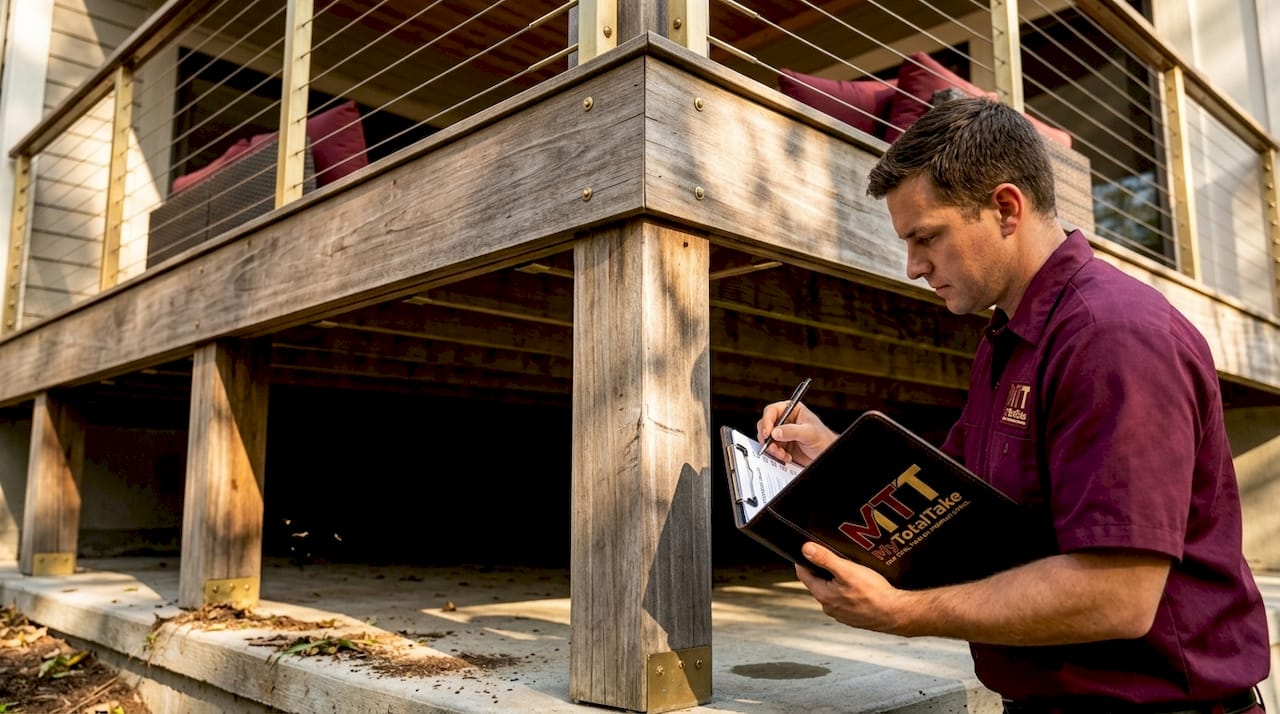
Some elevated outdoor concepts explicitly include outdoor rooms that go upward through terraces and rooftops or use raised structures, which changes views, privacy strategies, and enclosure needs compared with ground-level patios.
The advantages are real and worth considering seriously:
- Views. Even a modest elevation gain of 8 to 10 feet can reveal neighborhood greenery, water features, or skyline elements that are invisible from ground level.
- Privacy. Raised spaces naturally elevate you above neighboring fences and eyelines, reducing the need for privacy screens.
- Air circulation. Upper-level spaces typically catch more breeze, which dramatically improves summer comfort without mechanical cooling.
- Aesthetic distinction. A rooftop terrace or cantilevered deck signals a level of intentionality that ground-level patios rarely communicate.
Of course, elevated structures come with their own set of considerations. Material selection becomes more critical at height because wind loading is higher, weight matters more on rooftop applications, and access to water or power requires more careful planning.
| Feature | Ground-level patio | Elevated deck or terrace |
|---|---|---|
| Privacy | Requires screening | Natural elevation provides it |
| Views | Limited | Expanded significantly |
| Wind exposure | Moderate | Higher, requires windbreaks |
| Material weight | Flexible | Lightweight materials preferred |
| Access | Easy | Requires staircase design |
| Installation cost | Lower | Higher, but strong ROI |
If you’re considering a raised or modern patio furniture set for an elevated deck, material weight, UV resistance, and structural compatibility all factor into what performs best at height. Aluminum frames with performance cushions, for instance, offer excellent durability without adding excess load to rooftop structures.
Key features and luxury accents that redefine outdoor comfort
To round out our framework, let’s look at high-impact features and finishing touches that push outdoor comfort to the next level. Once your five pillars are in place, these are the elements that make the space feel genuinely indulgent rather than simply functional.
Materials matter first. The most durable and visually timeless choices for elevated outdoor living include:
- Teak: Naturally resistant to moisture, insects, and UV degradation. Develops a beautiful silver-gray patina over time or maintains its warm honey tone with occasional oiling.
- Powder-coated aluminum: Lightweight, rust-proof, and available in any color finish. Ideal for elevated structures and spaces in high-humidity climates.
- Performance fabrics: Solution-dyed acrylic fabrics (like Sunbrella) resist fading, mold, and UV damage. They look as rich and plush as indoor upholstery but are engineered for weather exposure.
Comfort upgrades that shift everything:
- Plush, deep-seating sectionals with performance cushions that stay comfortable in sun and humidity
- Outdoor fireplaces or fire pits that extend usability well into fall and create a natural gathering focal point
- Fully equipped outdoor kitchens with durable countertops (concrete, stainless steel, or porcelain) that handle heat and weather beautifully
- Built-in shade solutions such as motorized pergolas or retractable awnings that adjust to conditions rather than forcing you to work around them
Finishing touches that signal true elegance:
- Coordinated outdoor textiles: cushions, throw pillows, and rugs in weather-resistant fabrics that tie zones together visually
- Sculptural planters in metal, ceramic, or concrete that add height and architectural interest
- Integrated technology: weatherproof Bluetooth speakers, smart landscape lighting, and outdoor-rated televisions that extend your indoor entertainment seamlessly
Performance-oriented outdoor planning with shade structures and user comfort allows enjoyment well beyond peak summer, and the finishes you choose either support or undermine that goal over time.
Pro Tip: When selecting cushion fabrics, look for solution-dyed acrylic with a minimum UV protection rating of 50+. This ensures the color stays rich and vibrant after hundreds of hours of sun exposure, not just through the first season.
For everything from seating to shade, our outdoor furniture buying guide walks through what to look for at every price point when lasting luxury is the goal.
Why most outdoor spaces miss the mark—and how system-level design changes everything
Here’s the uncomfortable truth we’ve observed across countless beautifully styled outdoor spaces: the decor is often stunning, and the experience is often disappointing.
It’s a pattern worth addressing directly. Homeowners invest in gorgeous furniture, elevated lighting, and premium planters. Then the space sits unused for five months because it’s either too hot, too exposed, or too dark past 7 p.m. The mistake isn’t the products chosen. It’s the order of operations.
Most outdoor “upgrades” start with what looks good rather than what works year-round. That’s a fundamental design error. The pillars we outlined earlier, layout, zoning, microclimate, enclosure, and lighting, need to be resolved before the first furniture purchase is made. Once those decisions are locked in, every subsequent choice builds on a foundation that actually functions.
We’ve seen this clearly: a modest patio with thoughtful shade planning, smart zoning, and layered lighting consistently outperforms a premium patio without those elements. The space with system-level design gets used constantly. The premium-but-unplanned space gets admired occasionally.
True year-round comfort requires that you treat your outdoor space as architecture, not decor. That means respecting how sun moves across the property, how wind patterns shift seasonally, and how the space serves different activities at different times of day. Once that foundation exists, every luxury accent you add serves a real purpose and feels entirely right.
The reward is a space that earns its investment. Guests want to stay longer. You find yourself outside more often. The investment in long-lasting patio setups pays back in genuine enjoyment rather than occasional admiration. That’s the real definition of elevated outdoor living: not the look, but the lived experience.
How to bring luxury and lasting comfort to your outdoor living
Ready to take your outdoor space to the next level? Here’s how you can make it happen with our expert-approved resources and collections.
At mytotaltake.com, we’ve curated a selection of outdoor furniture, shade structures, and finishing accents that meet the standards this guide describes. Every piece in our outdoor collection is chosen with durability, aesthetics, and real-season performance in mind.

Whether you’re starting from scratch or refining an existing patio, our guides and curated picks are here to help you make decisions with confidence. From teak sectionals built to weather every season to performance-fabric cushions that stay beautiful year after year, we’ve done the filtering so you don’t have to. Explore our picks for patio furniture longevity and take the first real step toward a space that performs as beautifully as it looks.
Frequently asked questions
What makes an outdoor space truly ‘elevated’?
Intentional design for comfort, year-round use, and seamless indoor-outdoor flow distinguishes elevated outdoor living from basic setups. Extended seasonal comfort comes from thoughtful planning, not price alone.
Does an elevated outdoor living space require expensive furniture?
Not always. System-level planning for layout, shade, privacy, and usability matters more than price tags, though durable luxury finishes add lasting comfort and genuine longevity.
Can elevated outdoor living be achieved in small spaces?
Yes. Even compact patios or rooftops can feel luxurious with smart zoning, quality materials, and comfort-driven features. Outdoor rooms that go upward offer privacy and real functionality even on smaller footprints.
How do I make my outdoor living area usable year-round?
Incorporate weather protection like pergolas and performance fabrics, add layered lighting, and design for extended-season use with comfort-driven features that adapt to shifting conditions across every season.
Recommended
Top 4 Costco.com Alternatives 2026
Comments
[…] living overall: Designing elevated outdoor living spaces means thinking in terms of flow, shelter, lighting, and year-round usability, not just […]







Leave a comment