Why upgrade home technology? Unlock luxury & value

Most homeowners think smart home upgrades are about convenience. The reality is sharper: smart homes average $1.2M compared to $660K for non-smart homes in luxury markets. That gap is not a coincidence. The right technology choices can add real, measurable value to your property while transforming how you experience your home every single day. But not every upgrade delivers equally, and chasing every new gadget is a fast way to spend a lot and gain little. This guide breaks down which upgrades matter most, what returns you can realistically expect, and which pitfalls to avoid.
Table of Contents
- The strategic value of upgrading home technology
- High-impact upgrades: What delivers the best return?
- Efficiency, convenience, and elegance: Integration unlocks next-level living
- Risks and how to avoid them: Security, privacy, and complexity
- Our perspective: What truly sets luxury smart homes apart
- Elevate your lifestyle: Choose the best in luxury and tech
- Frequently asked questions
Key Takeaways
| Point | Details |
|---|---|
| Value boost | Smart tech upgrades can raise luxury home value by 3-5 percent or more. |
| Top ROI upgrades | Smart thermostats and security systems provide the greatest returns and comfort. |
| Seamless integration | Future-proof, integrated systems enhance efficiency and everyday living. |
| Security matters | Protect your investment by strengthening passwords and segmenting your smart home network. |
The strategic value of upgrading home technology
With property value and lifestyle enhancement in mind, let’s break down the strategic reasons behind upgrading home technology.
There is a persistent myth that smart home technology is a lifestyle indulgence with minimal financial upside. That is simply not accurate in today’s luxury market. Buyers at the high end of the market actively seek homes with integrated technology, and they are willing to pay a premium for it. Smart homes increase property value by 3 to 5% or more in luxury markets, a figure that can represent tens of thousands of dollars on a high-value property.
Beyond resale, the lifestyle benefits are tangible. Automated lighting that adjusts to your mood, climate systems that learn your preferences, and security that monitors your property without effort—these are not novelties. They are refinements that make daily living feel effortless and curated.
Here is what separates a smart home investment that pays off from one that does not:
- Integrated systems that communicate with each other outperform standalone gadgets every time
- Future-proof platforms (those supporting Matter and Thread protocols) protect your investment as standards evolve
- High-ROI anchors like thermostats and security deliver measurable returns quickly
- Design-forward hardware that blends into your interiors preserves the elegance of your home
“Technology should disappear into the architecture of your home. When it does, the experience feels like pure luxury.”
The key insight is that increasing home value through technology is not about stacking features. It is about choosing premium smart home upgrades that integrate seamlessly and serve your lifestyle for years to come. Think of it as curating your home’s intelligence the same way you would curate its art or furnishings.
High-impact upgrades: What delivers the best return?
Now that we’ve established the benefits, let’s see which upgrades actually deliver high returns and comfort for upscale homes.
Not all smart home upgrades are created equal. Some deliver immediate, measurable returns. Others look impressive in a showroom and underperform in daily life. The table below gives you a clear comparison of the most common upgrades and what they actually deliver.
| Upgrade | ROI Potential | Lifestyle Impact | Complexity |
|---|---|---|---|
| Smart thermostat | High | High | Low |
| Security system | High | High | Medium |
| Automated lighting | Medium | Very High | Low |
| Smart entertainment | Medium | High | Medium |
| Smart appliances | Low | Medium | High |
Smart thermostats lead the pack for a reason. Heating and cooling costs drop 10 to 23% with a smart thermostat, translating to $150 to $575 in annual savings for a typical household. In a larger luxury home, those numbers climb further. The payback period is often under 12 months.
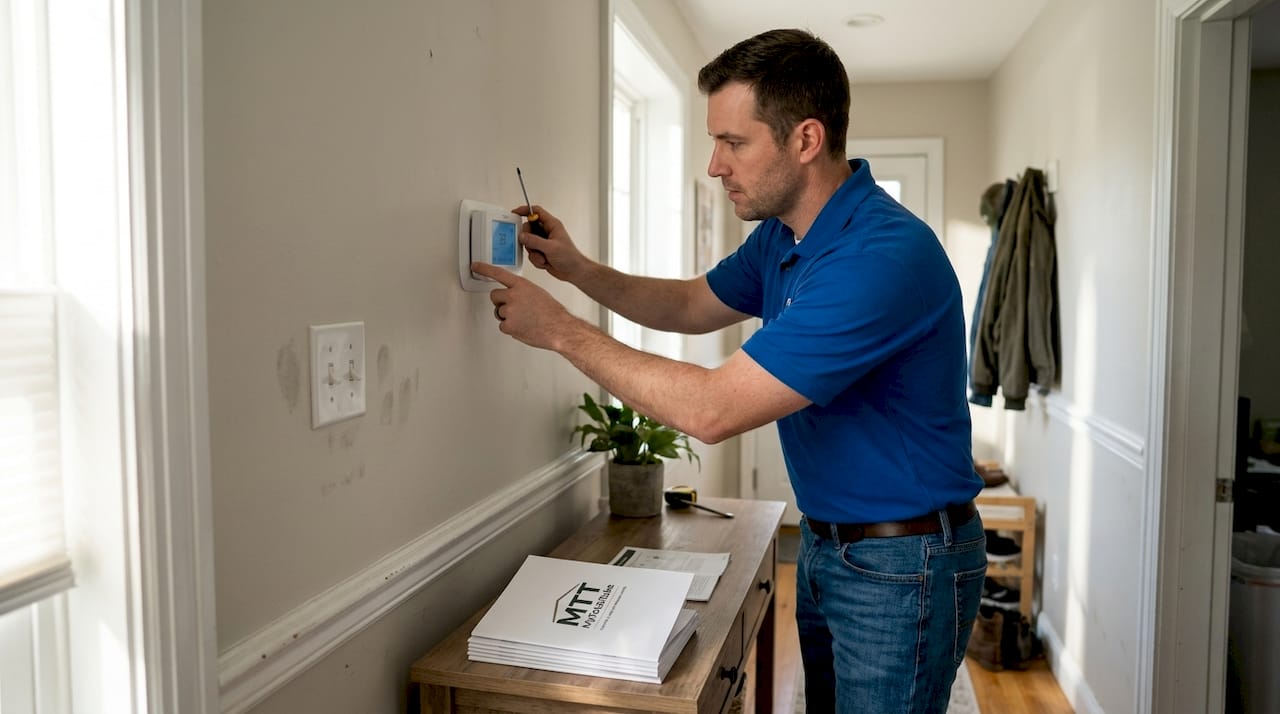
Security systems are the other anchor upgrade. Modern systems with AI-powered cameras, facial recognition, and remote access give you genuine peace of mind while adding serious appeal for future buyers. Automated lighting rounds out the top tier, offering dramatic lifestyle impact at relatively low cost and complexity.
Smart appliances, on the other hand, often disappoint. Over-automation creates complexity without proportional benefit, and connected refrigerators or ovens rarely justify their premium price tags through actual use.
Pro Tip: Start with thermostat and security as your anchor upgrades. Once those are running smoothly, layer in lighting automation and entertainment. This approach, supported by a professional smart home upgrades service, keeps complexity manageable and ROI front and center.
For older properties, installation nuances matter. Wiring limitations, plaster walls, and legacy HVAC systems can add cost and complexity. Budget for a professional assessment before committing to a full rollout. Explore future-ready comfort options that work within existing infrastructure, and consider a smart entertainment setup that elevates your media experience without a full renovation.
Efficiency, convenience, and elegance: Integration unlocks next-level living
Selecting upgrades is only the start; integrating them into a cohesive, elegant system is where luxury truly shines.
A home filled with disconnected smart devices is not a smart home. It is a collection of apps. True luxury comes from systems that work together, anticipating your needs and responding without friction. Integrated, future-proof systems deliver 20 to 35% in savings and command a measurable resale premium in 2026’s luxury market.
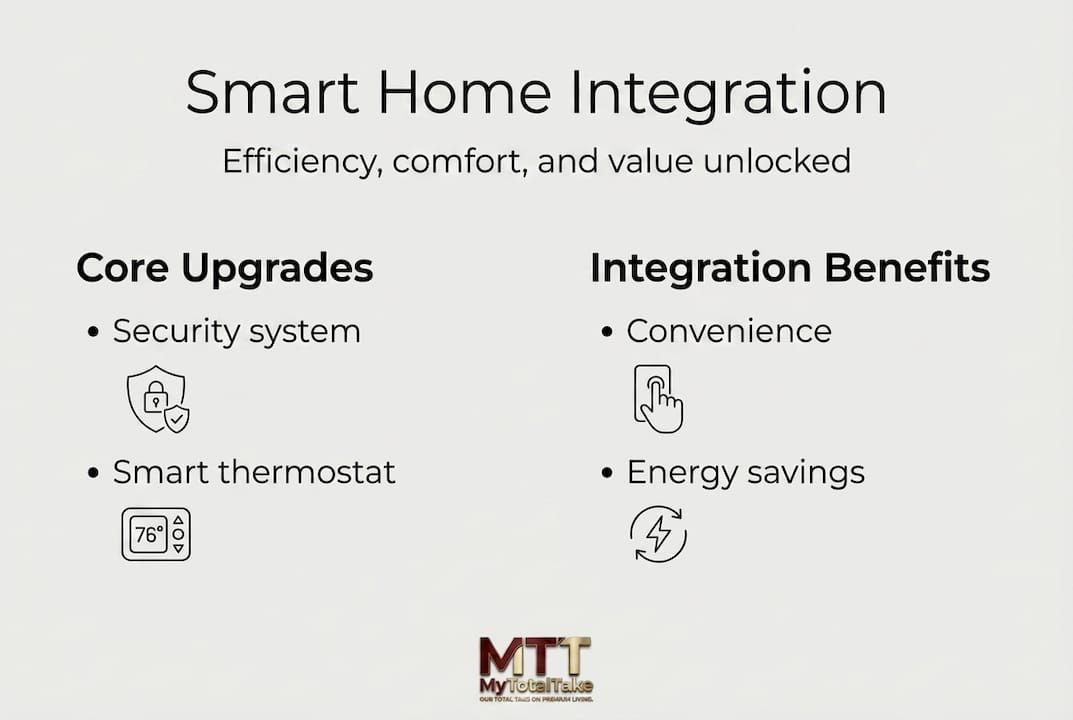
Here is what meaningful integration looks like in practice:
| System | Standalone Savings | Integrated Savings |
|---|---|---|
| Smart thermostat | Up to 23% | Up to 30% |
| Lighting automation | Up to 15% | Up to 22% |
| Energy management | Up to 18% | Up to 35% |
To plan a genuinely integrated system, follow these steps:
- Audit your current infrastructure. Understand your Wi-Fi coverage, electrical panel capacity, and existing devices before purchasing anything new.
- Choose a unified platform. Whether you prefer Apple HomeKit, Google Home, or a dedicated luxury platform like Control4, commit to one ecosystem.
- Upgrade your network first. Mesh Wi-Fi 7 is the backbone of a responsive smart home. Everything else depends on it.
- Add energy management. Pair your thermostat with smart lighting and a whole-home energy monitor for compounding savings.
- Automate thoughtfully. Build routines that reflect how you actually live, not how you imagine you might live.
Pro Tip: Prioritize devices that process AI locally rather than in the cloud. Local processing means faster response times and significantly better privacy. Segment your smart home devices onto a separate network from your personal computers and phones for an added layer of efficiency and security.
Design elegance matters here too. The best integrated systems are nearly invisible. Keypads that match your wall plates, speakers that disappear into ceilings, and bathroom tech upgrades that feel like natural extensions of the space—these details are what separate a truly luxurious home from one that merely looks the part.
Risks and how to avoid them: Security, privacy, and complexity
With the rewards of smart homes comes responsibility—here are the key risks and how to sidestep them for peace of mind.
The same connectivity that makes your home intelligent also creates vulnerabilities. 80% of IoT devices are vulnerable to attack, most due to weak default passwords and unpatched firmware. For a high-value home, the stakes are higher than a compromised thermostat. Think unauthorized access to security cameras, door locks, and personal data.
Here is a practical security checklist every smart homeowner should follow:
- Change all default credentials immediately on every device, no exceptions
- Segment your network so smart devices cannot communicate with personal computers or phones
- Enable automatic firmware updates to close security gaps as they are discovered
- Choose local-first devices that process data on your home network rather than sending it to external servers
- Audit connected devices annually and remove anything you no longer use
“The most elegant smart home is also the most secure one. Simplicity and discipline in setup are what protect your investment.”
Advanced AI surveillance systems that distinguish between a delivery driver and an intruder, and integrate biometric access, represent the gold standard for luxury security. These systems are worth the investment precisely because they reduce false alarms while improving genuine threat detection.
Complexity is the other hidden risk. A home with 40 connected devices and 12 separate apps is not convenient. It is exhausting. Focus your energy on proven smart security solutions and high-ROI systems. Consult a professional for thermostat installation and HVAC integration to ensure your core systems are set up correctly from day one. Simplicity is not a compromise. It is a feature.
Our perspective: What truly sets luxury smart homes apart
Making sense of competing trends is tough—here is our unfiltered take on what matters most for affluent homeowners.
We have seen the full spectrum: homes loaded with every connected gadget imaginable, and homes where two or three perfectly chosen systems make every morning feel effortless. The second type wins, every time.
The luxury smart home conversation gets hijacked by novelty. Connected wine fridges, voice-activated mirrors, app-controlled coffee makers—these generate excitement but rarely deliver lasting satisfaction. What does deliver? 85% of homeowners report satisfaction when their setup is done properly, and thermostats pay back their cost in 6 to 12 months. Those are the numbers that matter.
Our honest view: more is not better. A premium smart home strategy built around thermostats, security, and integrated lighting will outperform a sprawling collection of novelty devices every time. Future-readiness means choosing platforms and protocols that will still be relevant in a decade, not chasing the latest product launch. The homes that age gracefully are the ones built on restraint, quality, and genuine integration.
Elevate your lifestyle: Choose the best in luxury and tech
Ready to bring technology and elegance together in your home? Here’s where to start.
At mytotaltake.com, we curate products and insights for homeowners who refuse to settle. Whether you are refining your interiors or building out a connected home that performs as beautifully as it looks, our collections are chosen with the same discernment you bring to every purchase.

Explore our luxury decor inspiration to find pieces that complement your upgraded spaces, or discover how dining room elegance can anchor a home that feels as refined as it functions. Every product we feature is selected for craftsmanship, longevity, and the kind of quiet confidence that defines truly elevated living. Your home deserves nothing less.
Frequently asked questions
What is the most valuable home tech upgrade for ROI?
Smart thermostats deliver the best ROI, cutting energy bills up to 23% and typically paying for themselves within a year.
Which smart home upgrades are best for increasing luxury property value?
Integrated security, automated lighting, and energy management add the most value, with smart homes commanding a 3 to 5% premium or more in high-end markets.
How can I keep my smart home secure from cyber threats?
Segment your home network, change default passwords on every device, and choose hardware with local data processing, since 80% of IoT devices are vulnerable due to weak credentials.
Is over-automating my home worth it?
Over-automation creates complexity without proportional benefit; focus first on thermostats and security for the highest satisfaction and measurable returns.
Recommended
- Smart Home Upgrades That Feel Truly Premium
- No-Fee Smart Home Security That Still Feels Premium
- Enhancing Your Beauty Routine with a Vanity Mirror With LED Lights
- Unrivaled selection only for you
- The Smart Home Advantage: Upgrades That Increase Home Value in Bensalem – Precision Remodeling Solutions
- Smart home upgrades to boost efficiency and security
Elevate Your Home: How Design Impacts Luxury Decor
Comments
[…] Why upgrade home technology? Unlock luxury & value […]
[…] between security, energy efficiency, and buyer interest is direct. For anyone thinking about upgrading home technology, the return on investment case for home automation extends well beyond the years you spend living […]
[…] upgrade transform how buyers perceive a space, not because the fixture was flashy, but because the layered warmth it created made every other element look […]
[…] Why upgrade home technology? Unlock luxury & value […]
[…] Why upgrade home technology? Unlock luxury & value […]
[…] covers everything from Ecobee and Nest thermostats to Schlage and Yale smart locks. Done right, a well-planned smart home costing $3,000–$6,000 delivers 50–65% resale ROI plus annual savings of $300–$500. The key is […]
[…] The same person who invests in a high-end range, refined barware, or beautifully designed countertop appliances will often find an espresso machine a natural addition rather than an […]











Leave a comment