
How decor transforms your lifestyle and wellbeing

Most people think of home decor as the finishing touch, something visual that signals taste and status. That view undersells it dramatically. The environment you live in shapes your mood, your cognitive clarity, your stress levels, and even your physical comfort in ways that operate below conscious awareness. When you invest in premium decor with intention, you are not simply adding beauty to a room. You are engineering the conditions for a better life.
Table of Contents
- Why decor matters: The science behind lifestyle enhancement
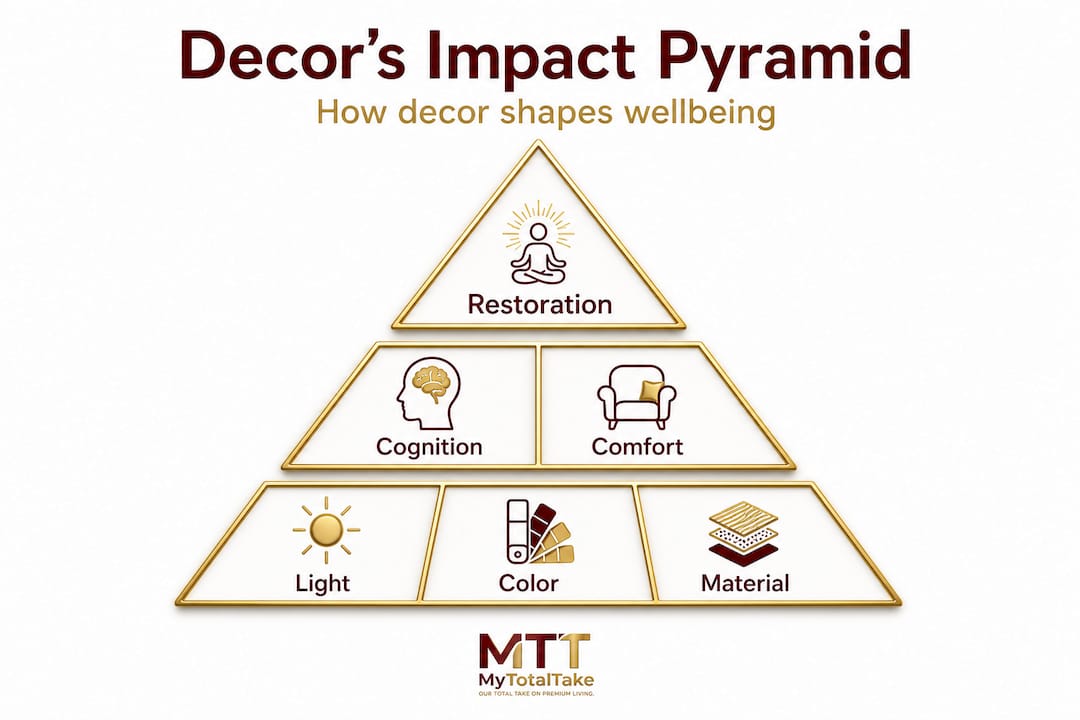
- Mechanisms of decor influence: Comfort, cognition, and restoration
- Personalization: The art and nuance of luxury decor
- Living room focus: Where investment pays off in lifestyle enhancement
- The uncomfortable truth: When luxury decor fails and how to fix it
- Shop premium decor for your next lifestyle upgrade
- Frequently asked questions
Key Takeaways
| Point | Details |
|---|---|
| Decor impacts wellbeing | Interior design choices influence emotional health and daily comfort. |
| Nature-inspired boosts | Biophilic elements measurably improve relaxation and mood when used thoughtfully. |
| Personalization is vital | Decor must be tailored to individual preferences and context to avoid chaos and maximize benefit. |
| Living room leverage | Luxury investments in the living room yield the greatest lifestyle return for homeowners. |
| Trends vs. strategy | Evidence-based decor strategies deliver more value than blindly following design trends. |
Why decor matters: The science behind lifestyle enhancement
Interior design has always had intuitive appeal, but the science behind it has matured considerably. Environmental psychology now provides a rigorous framework for understanding how the physical qualities of your home influence emotional states, productivity, and overall wellbeing. This is not soft opinion. It is evidence gathered across controlled studies and real-world observations.
Interior factors like light, color, and layout can influence how people feel and function at home in ways that are both automatic and deeply personal. Natural light exposure regulates circadian rhythms. Color temperature affects alertness and calm. Spatial proportion shapes whether a room feels expansive and freeing or tight and stressful. Material choices, from the warmth of solid walnut to the cool refinement of brushed marble, communicate quality signals that register subconsciously and elevate everyday experience.
Understanding the impact of design on luxury decor helps clarify why elite residences feel consistently different. It is not just the price of the pieces. It is the deliberate orchestration of these environmental variables.
Key factors shaping your lived experience
| Decor factor | Primary effect | Measurable outcome |
|---|---|---|
| Natural light | Circadian regulation | Improved sleep and alertness |
| Color palette | Emotional tone | Mood stability and comfort |
| Spatial layout | Cognitive load | Focus and perceived spaciousness |
| Material quality | Sensory comfort | Satisfaction and relaxation |
| Sound absorption | Acoustic comfort | Stress reduction and calm |
“Interior design decisions function as silent behavioral architecture. Every surface, source of light, and spatial choice sends a message your nervous system interprets long before your conscious mind notices.”
These effects are not trivial. Consistent exposure to poorly designed environments, even comfortable ones that simply lack intentional orchestration, accumulates into chronic low-grade stress. Conversely, a home where light, color, and layout are thoughtfully managed delivers a compounding wellness benefit that no single wellness product can match.
Why this matters for luxury decor buyers specifically:
- Premium materials carry tactile signals that register as quality and safety
- Curated color palettes reduce visual noise and cognitive fatigue
- High-quality lighting layers create emotional versatility across times of day
- Spatial organization through well-chosen furniture directly supports mental clarity
The foundation is solid. Decor is not decoration. It is environment design, and environment design changes lives.
Mechanisms of decor influence: Comfort, cognition, and restoration
Once we accept that decor influences wellbeing, the next question becomes: exactly how? The mechanisms fall into three interconnected categories: sensory comfort, cognitive management, and restoration. Each one is actionable and worth understanding in depth.
Sensory comfort is the most immediate layer. It includes lighting quality, acoustic management, and the tactile experience of materials. A room with harsh overhead lighting, hard reflective surfaces, and no sound absorption creates a sensory environment closer to a commercial office than a restorative home. By contrast, layered lighting with warm-toned sources at varying heights, acoustically rich textiles, and materials with natural variation creates a sensory environment that immediately signals rest and safety to the nervous system.
Cognition is the subtler layer. Visual complexity affects how much mental energy you spend simply processing your environment. A room with unresolved clutter, competing visual focal points, and no coherent organizational logic requires ongoing cognitive effort. Luxury decor, when approached thoughtfully, reduces visual noise through intentional curation. Every piece earns its place. The result is a room you can relax in rather than one you constantly process.
Biophilic design elements like greenery measurably improve perceived restorativeness, positive emotional states, and reduced physiological arousal. Nature-inspired rooms do not just look calming. They create measurable shifts in how the body responds to the space.
In controlled virtual environments, adding biophilic elements such as greenery and natural features reduced skin conductance levels, a direct physiological marker of lower stress. The body responds to nature cues even in simulated form, which speaks to how deeply wired these responses are.
The practical applications are significant. Investing in premium home upgrades that incorporate natural materials, living plants, water features, and organic forms delivers lifestyle returns that far exceed their aesthetic appeal.

How decor mechanisms compare in lifestyle impact
| Mechanism | Decor application | Lifestyle benefit | Effort to implement |
|---|---|---|---|
| Sensory comfort | Layered lighting, quality textiles | Immediate relaxation | Moderate |
| Cognitive clarity | Curated layout, visual coherence | Sustained focus and calm | High, requires editing |
| Biophilic restoration | Plants, natural materials, water | Stress reduction | Low to moderate |
| Acoustic management | Rugs, drapes, soft furnishings | Noise reduction, calm | Low |
How to apply these mechanisms step by step
- Audit your light. Walk through each room at different times of day. Identify where the light is harsh, flat, or missing. Add warm-toned fixtures at lower heights where you relax and brighter, cooler light where you work.
- Edit your surfaces. Remove anything that does not contribute visually or functionally. Visual coherence is not minimalism; it is intentional curation. Every piece should reinforce the room’s purpose.
- Introduce a nature element. A single large-format plant, a stone surface, or a piece of live-edge wood furniture activates biophilic responses without overwhelming the space.
- Add acoustic texture. Layered textiles, rugs on hard floors, and upholstered pieces absorb sound and soften the sensory environment immediately.
- Revisit the palette. A room where colors compete creates low-grade tension. A room where colors converse creates ease.
Pro Tip: Cohesion matters more than any single element. Adding five biophilic features to an otherwise chaotic space will not deliver restorative benefits. Address the room as a system, not a collection of individual pieces.
Personalization: The art and nuance of luxury decor
One of the most important insights from recent research is that decor’s effects are not uniform. The same choices that create calm and fascination for one person can feel overwhelming or sterile for another. This is not a flaw in the science. It is a critical signal for how to approach your own home.
Individual traits shape everything. Research on greenery integration and perceived chaos shows that while adding plants increases fascination, it can simultaneously increase perceived disorder for people with high need for visual order. A person’s nature-relatedness, their existing emotional connection to natural environments, also moderates how strongly they benefit from biophilic decor choices.
This means the starting point is always you, not the trend. Before adding the statement piece everyone is buying or layering in greenery because a magazine says so, the smarter approach is to understand what your nervous system actually needs. Do you crave visual richness and stimulation, or do you restore in quieter, more edited spaces? Do you find a lush collection of plants energizing or distracting?
Questions that sharpen personalization:
- Do you feel more at ease in open, minimal spaces or warm, layered ones?
- What materials do you instinctively gravitate toward: cool stone, warm wood, soft textiles?
- Where in your home do you feel best, and what are the decor qualities of that space?
- Are there rooms you avoid without knowing exactly why?
The answers guide investment priorities far more reliably than seasonal trend reports.
Comfort personalization is equally important for furniture. The right sofa is not just about visual style. Exploring options like a cloud couch for personalized comfort or understanding the lifestyle case for an oversized plush sofa reflects this principle. Seating that physically supports you in the positions you actually use creates daily wellness returns that a beautiful but uncomfortable piece never will.
Pro Tip: Start with your personal needs, then refine with expert guidance. A luxury decor advisor or a detailed self-assessment of your existing space will reveal gaps and opportunities that trend-following never surfaces.
Living room focus: Where investment pays off in lifestyle enhancement
If you want to prioritize where to concentrate your decor investment for maximum lifestyle return, the answer is consistent across affluent homeowners. 38% of luxury renovation budgets go to the living room, making it the dominant leverage zone for lifestyle enhancement spending.
This makes complete sense. The living room is where you host, relax, recover, and entertain. It is the room that sets the tone for the entire home. It is also the room where every mechanism we have discussed, sensory comfort, cognitive clarity, biophilic restoration, and acoustic quality, can be brought together most powerfully.
38% of luxury homeowners direct their renovation budgets toward the living room, making it the single highest-return space for decor investment.
Living room upgrades with the highest lifestyle impact
| Investment category | Example | Primary lifestyle benefit |
|---|---|---|
| Seating | Ergonomic, high-quality sofas and chairs | Physical comfort and long-term wellness |
| Lighting | Layered fixture systems with dimming | Emotional versatility and circadian support |
| Statement pieces | Sculptural art, curated accessories | Visual identity and cognitive stimulation |
| Integrated technology | Hidden AV, smart lighting | Convenience and seamless living |
| Natural materials | Stone, live-edge wood, quality textiles | Biophilic and sensory comfort |
Practical living room decor priorities:
- Choose seating with genuine ergonomic integrity, not just visual presence
- Anchor the room with a strong, cohesive focal point whether that is a living room fireplace feature or a curated art arrangement
- Layer your lighting into at least three distinct sources and heights
- Invest in a rug that grounds the seating area acoustically and visually
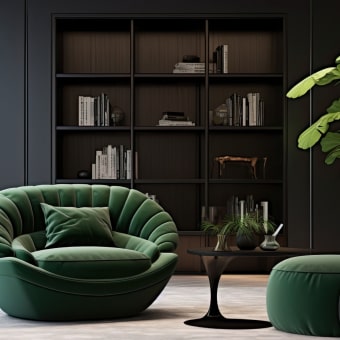
- Consider sculptural furniture like a bubble couch in a refined colorway as a statement that also delivers comfort
The living room rewards investment more than any other space because it is where you spend the most discretionary time. When this room works at every level, sensory, cognitive, and aesthetic, the lifestyle improvement is daily and cumulative.
The uncomfortable truth: When luxury decor fails and how to fix it
Here is what most decor content will not tell you. Spending generously on luxury pieces does not guarantee a better lifestyle. We see this pattern regularly, and it is worth addressing directly.
The failure mode is predictable. A homeowner invests in a curated collection of high-end pieces, each beautiful in isolation, but assembled without a coherent strategy. The result is a room that looks impressive in photographs but feels unresolved in person. The pieces compete rather than converse. The sensory experience is visual richness without emotional ease.
The other common failure is blind trend-following. Biophilic design is a compelling example. Research confirms not every decor choice produces uniform effects; outcomes depend on the specific intervention, the individual, and the context. Someone who covers every surface with plants because a trend says biophilic living is transformative may find they have created a space that feels chaotic rather than restorative.
The fix is mechanism-mapped, evidence-informed personalization. Before any new investment, we recommend auditing your existing space for coherence and comfort through a framework informed by ergonomic comfort principles. Ask: does this room function as a system? Does each element support the sensory, cognitive, and restorative needs of the people who use it most?
The most beautifully curated homes are not the ones with the most expensive pieces. They are the ones where every choice was made with clarity of purpose. That discipline, applied to a premium collection, is what delivers lasting lifestyle enhancement.
Pro Tip: Before adding anything new, spend a week noticing what already works in your space and what creates friction. That audit will give you a clearer brief than any trend report.
Shop premium decor for your next lifestyle upgrade
The research is clear and so is the opportunity. When decor choices are made with intention, guided by evidence and personalized to your needs, the lifestyle returns are real and lasting. The question is where to find the quality and curation that makes the difference.

At mytotaltake.com, we have assembled collections specifically for homeowners who want more than surface beauty. Whether you are ready to explore high-end decor solutions that combine craftsmanship with lasting elegance, looking for modern home decor inspiration for a refined update, or ready to choose timeless luxury decor that will hold its value in style and quality, our curated catalog is built to support every stage of your journey. Every piece is selected with the same standards this article advocates: function, sensory quality, and enduring elegance.
Frequently asked questions
How does decor directly affect wellbeing?
Interior factors like light, color, and layout shape mood, emotional comfort, and cognitive function in automatic ways, meaning your environment influences how you feel before you consciously register why.
Are nature-inspired decor elements always beneficial?
Not universally. While greenery and natural elements generally improve mood and perceived restorativeness, individuals with a high need for visual order may find dense greenery increases perceived chaos, making personalization essential.
Which room should get priority for luxury decor investment?
The living room delivers the highest return. 38% of luxury renovation budgets go there, reflecting its role as the primary lifestyle and social space in affluent homes.
Does following luxury decor trends guarantee a better lifestyle?
No. Decor effects are not uniform across individuals and contexts, so trend-driven choices without personal alignment often fail to deliver real lifestyle improvement. Evidence-based personalization is consistently more effective.
Recommended
Comments
[…] How decor transforms your lifestyle and wellbeing […]







Leave a comment