
Why invest in high-end decor: Real value beyond aesthetics
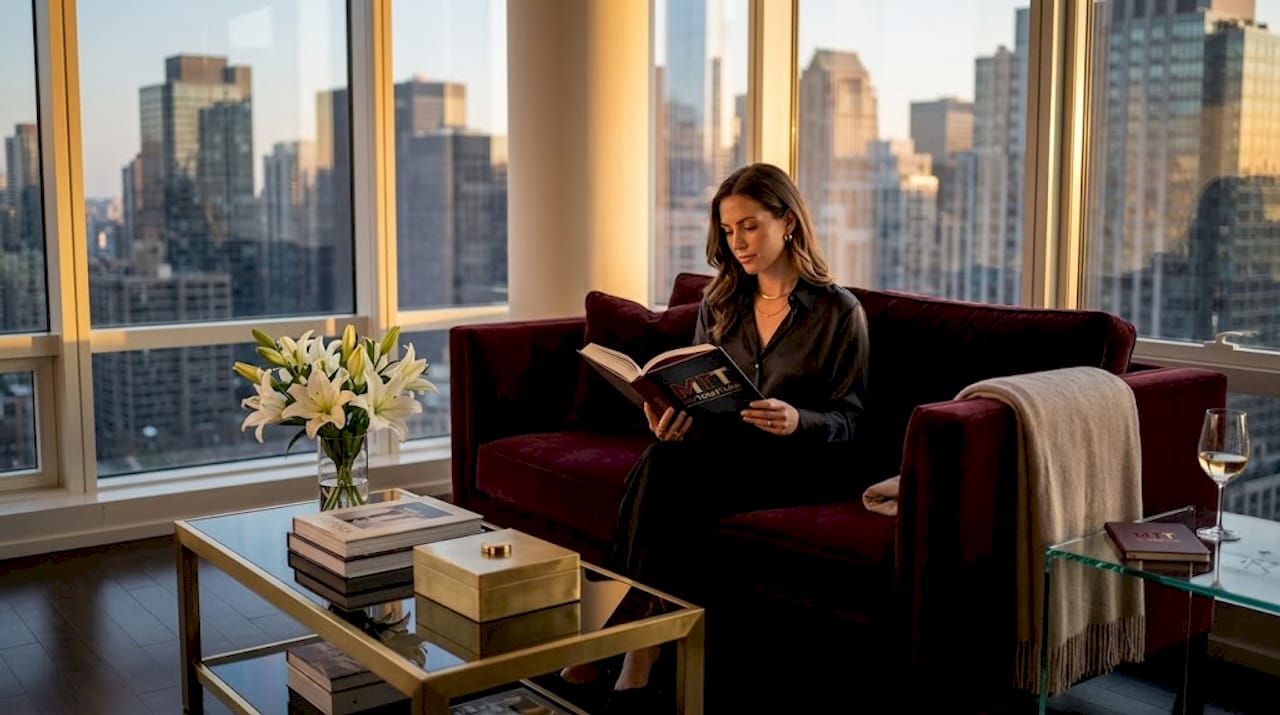
Most homeowners treat decor as a finishing touch, a layer of style applied after the real decisions are made. That framing costs you. High-end decor, selected with intention, functions more like a long-term asset than a line item on a renovation budget. It extends the life of your interiors, supports stronger sale prices, and delivers daily value that budget pieces simply cannot match. This guide breaks down exactly how quality, craftsmanship, staging strategy, and smart selection work together to turn your decor choices into genuinely sound investments.
Table of Contents
- What makes high-end decor an investment?
- Financial returns: Staging, sale price, and value retention
- Personalization vs. market appeal: How much is too much?
- Craftsmanship and contemporary strategy: Framework for smart decor investment
- The overlooked truth about investing in high-end decor
- Ready to invest in decor that delivers lasting value?
- Frequently asked questions
Key Takeaways
| Point | Details |
|---|---|
| Durability and longevity | High-end decor lasts much longer than mass-market items, reducing frequent replacements. |
| Market appeal and resale | Luxury interiors can boost home sale price and cut time on market with the right presentation. |
| Asset value retention | Recognized brands and quality pieces can keep or increase their value if cared for properly. |
| Personalization balance | Too much customization can lower broad appeal—neutral staging often works best for resale. |
| Smart investment framework | Use lifecycle cost and market fit to evaluate high-end decor for lasting value. |
What makes high-end decor an investment?
The word “high-end” gets used loosely. In the context of real investment value, it refers to pieces engineered for longevity: superior materials, expert joinery, finishes that wear gracefully rather than deteriorate quickly. This is a fundamentally different construction philosophy from mass-market furniture.
Consider the lifecycle of a sofa. A budget model typically lasts around five years before the frame weakens, cushion fill compresses, and fabric thins. A high-end sofa, made with kiln-dried hardwood frames and hand-tied springs, often remains structurally sound and visually appealing for 15 to 20 years. As noted in research on long-term furniture value, high-end decor is built for durability, using better materials and construction rather than short replacement cycles. Over two decades, the math often favors the premium purchase.
Beyond lifespan, high-end pieces typically require less maintenance. Premium upholstery grades resist fading and staining. Solid brass hardware doesn’t tarnish rapidly. Stone and hardwood surfaces, when properly sealed, hold up without costly professional restoration. These practical factors quietly reduce the true cost of ownership over time.
What to look for when assessing high-end decor:
- Construction materials: Solid hardwoods, hand-tied spring systems, full-grain leathers, and architectural-grade metals
- Finish quality: Lacquers and stains applied in multiple coats with sanding between layers
- Brand reputation: Established makers with service networks and replacement parts availability
- Design integrity: Timeless silhouettes that won’t feel dated in a decade
- Certifications: Responsible sourcing labels, low-VOC finishes, and quality testing standards
| Feature | Budget decor | High-end decor |
|---|---|---|
| Average lifespan | 3 to 5 years | 15 to 25 years |
| Maintenance frequency | High | Low to moderate |
| Resale market | Minimal | Established secondary markets |
| Brand value retention | Rare | Common in recognized names |
| Material quality | Engineered wood, synthetics | Solid hardwoods, natural fibers |
Understanding these high-end decor essentials is the first step toward reframing your purchasing mindset. And the impact of design goes even further, shaping how a space feels, functions, and holds its value over time.
Pro Tip: Before buying any premium piece, calculate the cost-per-year of ownership by dividing the purchase price by its expected lifespan. A $3,000 sofa lasting 20 years costs $150 per year. A $600 sofa lasting five years costs $120 per year, but you buy it four times. The numbers tell the real story.
Financial returns: Staging, sale price, and value retention
Here is where decor stops being personal preference and starts showing up in your bank account. Professionally staged homes and designer-curated interiors have measurable effects on how quickly a property sells and at what price.
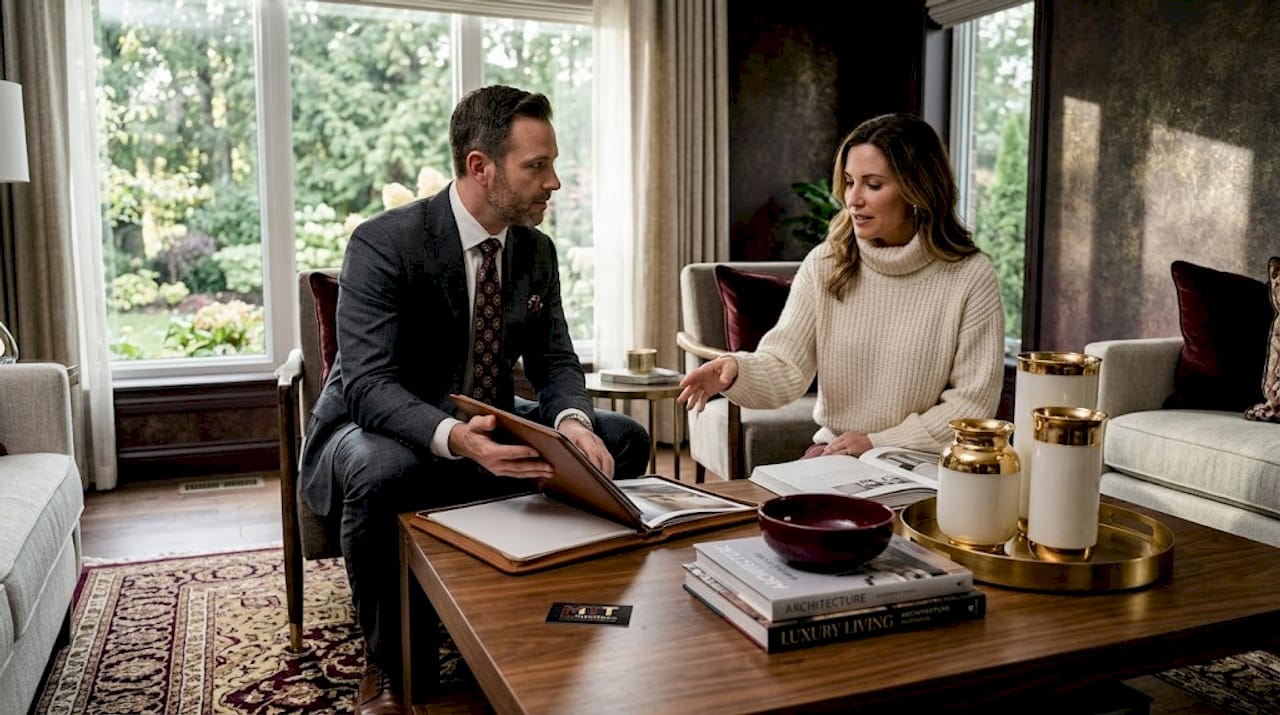
Industry data is striking. Home staging boosts sale prices and reduces time on the market, according to the National Association of Realtors. Depending on market conditions, staged luxury homes may command anywhere from a 1% to 10% premium over comparable unstaged properties. In high-value markets, that uplift can translate directly into tens of thousands of dollars.
Some industry examples go even further, pointing to value lifts approaching 24% when a luxury interior is styled with coherent, high-quality pieces aligned to buyer expectations in that price bracket. While those figures represent strong-scenario outcomes, the directional evidence is consistent: presentation matters, and quality decor is central to that presentation.
“Buyers in the luxury segment don’t just purchase square footage. They purchase the vision of a life. High-end decor makes that vision tangible.”
Resale also extends to individual pieces. Certain luxury categories retain strong secondary market value when the brand is recognized, the condition is maintained, and the design remains desirable. Rebag’s annual luxury appraisal index consistently shows that identifiable, well-maintained luxury items hold value far better than generic alternatives. The principle applies beyond accessories and into statement furniture, lighting, and art.
What appraisers and luxury buyers look for in high-end interiors:
- Coherence of style across rooms, with a clear design narrative
- Quality materials at key touchpoints: flooring, lighting fixtures, and upholstery
- Statement pieces from recognized makers that signal investment and taste
- Maintenance evidence: no visible wear, original hardware intact, surfaces clean
- Photogenic spaces, since most luxury home searches begin online with photography
| Decor level | Average days on market | Estimated price premium |
|---|---|---|
| Unstaged, budget finishes | 60 to 90 days | Baseline |
| Staged, mid-range decor | 40 to 60 days | 1% to 3% above baseline |
| Staged, high-end luxury decor | 20 to 35 days | 5% to 10% above baseline |
| Curated luxury, recognized brands | Under 25 days | Up to 10%+ above baseline |
When you are choosing premium pieces, think about which items will photograph beautifully and resonate with buyers in your local market. It is also worth exploring popular luxury styles to ensure your investment aligns with what buyers in your price bracket are actively seeking.
Personalization vs. market appeal: How much is too much?
This is where intelligent investing requires real restraint. Your personal style is what makes your home uniquely yours. But when decor investment is also intended to protect or grow your property’s market value, the equation changes.
Luxury staging guidance is clear on this point: overly personalized decor can narrow your buyer pool significantly. A boldly colored accent wall, custom built-ins in niche sizes, or a dramatic wallpaper pattern in the primary bedroom may feel expressive and personal while you live there. For potential buyers, those same features can trigger hesitation, renovation math, or simply a loss of vision for the space.
The strategy is not to strip your home of personality. It is to layer wisely. Statement pieces work best as accents within a neutral, universally appealing framework. Think of it this way: a stunning sculptural light fixture over a neutral dining table reads as aspirational. That same table topped with bold custom china, flanked by vivid accent walls and unconventional seating, starts to feel like your home rather than a home a buyer can imagine themselves in.
Do’s and don’ts for balancing personalization with market value:
- Do invest in quality upholstery in warm neutrals or classic jewel tones with broad appeal
- Do use statement art and accessories that can be swapped out easily before listing
- Do choose furniture with classic silhouettes that suit multiple design styles
- Don’t install permanent, highly custom features without understanding your local resale market
- Don’t use trendy color palettes that date quickly or polarize buyer taste
- Don’t over-furnish spaces in ways that reduce the sense of scale and light
“The most successful luxury interiors we see give buyers permission to move in. They inspire without imposing.”
Pro Tip: If you are planning to sell within the next two to three years, store your boldest art and most personal wallpapers temporarily. Replace them with curated, neutral-toned pieces that broaden appeal without sacrificing the quality signal. It is a simple swap with a meaningful financial payoff.
When curating unique spaces, the goal is distinctiveness with accessibility. And your wall art strategies deserve the same intentional calibration.
Craftsmanship and contemporary strategy: Framework for smart decor investment
Now that you understand the trade-offs, let us look at a practical framework for making high-end decor decisions that serve both your living experience and your long-term financial interest.
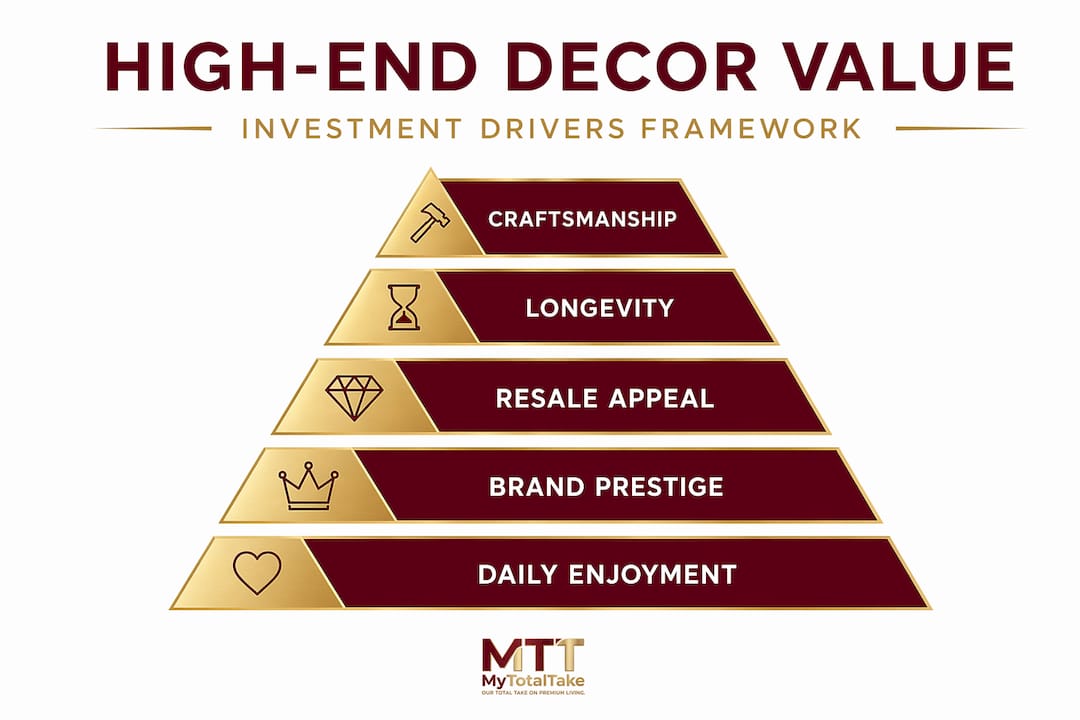
Interior design as a value booster is well recognized in the luxury market, with contemporary craftsmanship and design strategy positioned as key differentiators for resale readiness. The challenge is knowing which investments drive ROI and which simply satisfy personal taste without a financial return.
Steps to smart high-end decor selection and management:
- Define your investment horizon. Are you buying for the next five years or the next 20? Your timeline shapes which categories to prioritize.
- Assess lifecycle cost first. Divide price by expected lifespan. Include estimated maintenance costs for honest comparison.
- Prioritize high-visibility zones. Living rooms, primary bedrooms, and entry spaces drive first impressions and photograph well.
- Choose recognized materials and makers. Solid wood, natural stone, and established design brands carry identifiable quality signals.
- Document your pieces. Keep receipts, provenance, and care records. This supports resale value and insurance claims.
- Review annually. Assess whether each piece still serves its functional and aesthetic role. Rotate, resell, or restore as needed.
| Feature | Value impact | Notes |
|---|---|---|
| Solid hardwood construction | High | Refinishable, long-lasting, photogenic |
| Designer brand recognition | High | Supports secondary market resale |
| Natural stone surfaces | High | Durable, aspirational, buyer-facing |
| Neutral palette upholstery | High | Broad appeal, staging-ready |
| Custom or niche colors | Moderate to low | Personal enjoyment, limited resale pull |
| Trendy material finishes | Low | Dates quickly, may require updating |
| Synthetic or engineered materials | Low | Short lifespan, limited resale interest |
Exploring modern luxury decor ideas can sharpen your eye for which contemporary pieces are built around lasting design logic versus seasonal appeal. For outdoor spaces, investing in long-lasting patio furniture follows the same framework: materials, brand, and enduring design drive real value.
The overlooked truth about investing in high-end decor
Let us be honest about something the industry rarely admits openly. Many articles citing dramatic ROI figures for luxury interiors draw from marketing materials and case studies curated to show best-case outcomes. Claims of large ROI uplifts for high-end interiors often come from industry-aligned sources rather than independent, controlled research.
That does not mean the investment case is false. It means the numbers are scenario-dependent. A luxury-staged home in a strong seller’s market at a premium price point will perform very differently from the same property in a buyer’s market with oversupply. Local context matters enormously.
Our experience across curated luxury products tells us this: the discipline of buying recognized, maintainable, classically designed pieces consistently delivers value across different market conditions. It is not about chasing the highest-cited percentage uplift. It is about filtering ruthlessly for quality, longevity, and broad appeal.
The buyers and homeowners we see make the smartest decisions treat each decor purchase with the same scrutiny they would apply to any long-term asset. They check local comparables. They ask whether the piece will photograph well. They consider whether a buyer in their market will recognize and value the brand. They plan for a future sale even while enjoying the piece today.
Pro Tip: Treat every high-end decor claim as scenario-dependent, not a guarantee. Research your specific local market and confirm whether luxury staging has actually produced measurable outcomes in comparable properties before planning your investment strategy around industry-wide averages.
The true luxury impact is not just financial. When you invest in pieces built with genuine craftsmanship and clear design purpose, your daily living experience improves in ways that are real and consistent, regardless of market timing.
Ready to invest in decor that delivers lasting value?
If this guide shifted the way you think about high-end decor, you are already ahead of most homeowners. The real next step is applying that thinking to your own space.
At mytotaltake.com, we curate premium pieces with exactly this investment lens in mind: quality materials, recognized craftsmanship, timeless design, and lasting appeal. Whether you are building a space from the ground up or refining what you already have, our explore high-end decor collection gives you a strong starting point. For foundational investments, explore the case for designer furniture benefits and discover our guide to smart luxury furniture picks that align both personal enjoyment with real financial logic.
Frequently asked questions
Does high-end decor always increase my home’s value?
Not automatically. High-end decor increases value when paired with broad appeal, but overly personalized choices can reduce your buyer pool and offset gains.
How long does high-end furniture typically last?
High-end sofas last 15 to 20 years on average, compared to roughly five years for lower-cost alternatives, making the long-term cost comparison far closer than the sticker price suggests.
Can certain brands of luxury decor retain or even increase in value?
Yes. The Rebag Clair Report confirms that identifiable, desirable, and well-maintained luxury pieces hold value strongly in secondary markets.
Is there a proven percentage ROI for investing in high-end interiors?
Industry figures suggest uplifts up to 24%, but ROI claims vary widely by source and market, so always verify against local comparable data before projecting returns.
How do I balance personalization with resale value?
Use signature pieces as accents within a neutral, widely appealing palette, and moderate bold customizations before listing to maintain the quality signal without narrowing your buyer pool.
Recommended
Durable luxury furnishings that elevate your home
Comments
[…] also think the industry undervalues decor’s role beyond aesthetics in signaling quality and care. A well-chosen piece of furniture or a thoughtfully designed outdoor […]







Leave a comment